
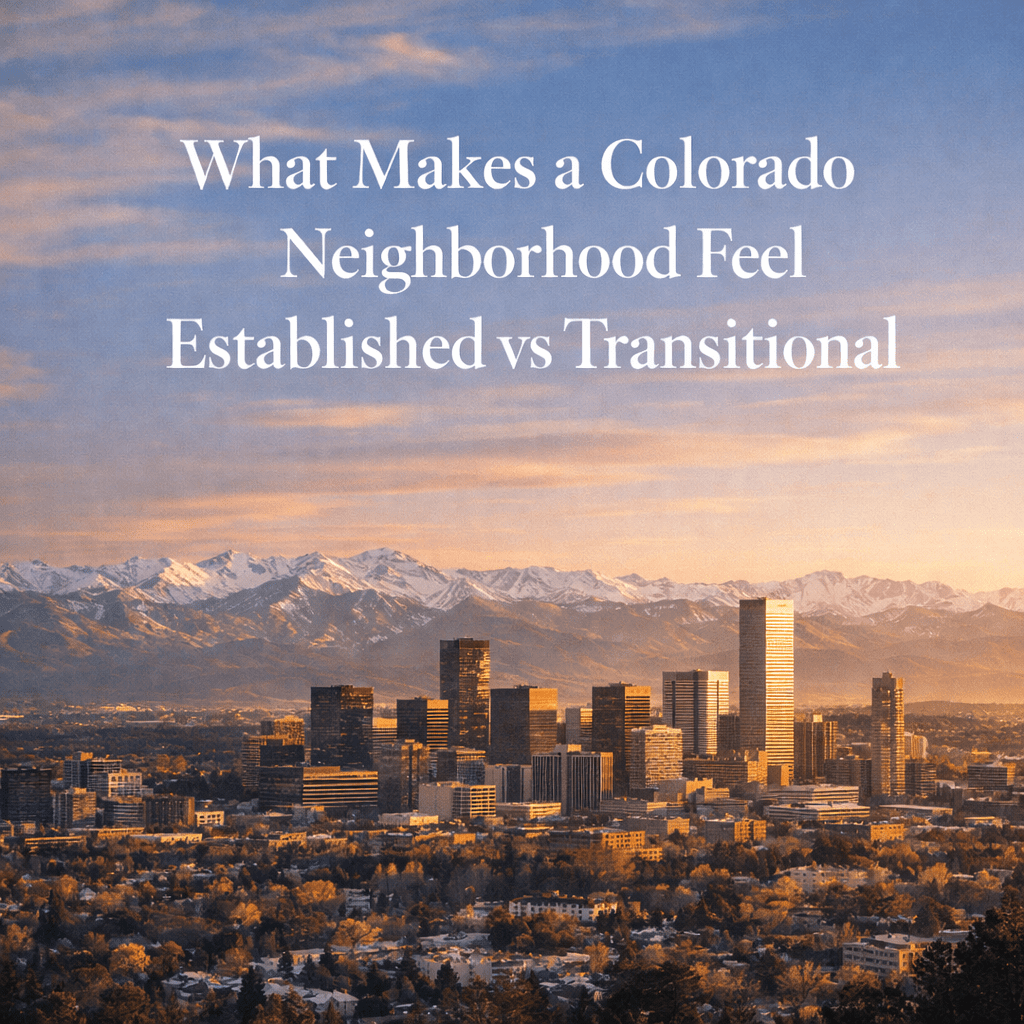
Colorado neighborhoods along the Denver metro and Front Range reveal their character through subtle markers of maturity versus growth. Established areas like older sections of Littleton or Arvada exude permanence with mature trees and cohesive architecture, while transitional zones in expanding suburbs such as Parker or Lone Tree show construction cranes and mismatched styles. These distinctions matter because they influence long-term stability, resale predictability, and daily ownership experience amid the region’s rapid population shifts.
Buyers and sellers attuned to these cues make decisions that align with market psychology, where established appeal sustains value through economic cycles.
Tree Canopy and Landscaping Maturity
Established neighborhoods feature 40-60-year-old trees that form canopies, shading streets and buffering wind in winter. In Washington Park or Hilltop, elms and oaks planted in the 1960s-1970s create privacy screens, reducing noise from C-470 and stabilizing soil against erosion. This maturity cuts summer cooling costs by 10-15% via natural shade, a premium absent in transitional areas where saplings struggle against dry winds.
Transitional developments in Centennial or Castle Rock plant nursery stock that takes decades to root, leaving exposed lots prone to dust and runoff during spring thaws. Buyers overlook this, chasing new builds, but mature landscaping signals low-maintenance futures and higher appraisals, as trees add $5,000-$10,000 per specimen in perceived value.
Architectural Cohesion and Streetscape Harmony
Permanence emerges from uniform setbacks, rooflines, and materials that weather uniformly. Evergreen’s 1970s ranches blend with subtle updates, fostering community identity that resists teardowns. Varied facades signal transition: mismatched vinyl siding next to stone in Lone Tree hints at phased builds, creating visual discord that appraisers note in comparability adjustments.
Established streets widen over time through dedications, easing parking and plowing. Transitional cul-de-sacs feel cramped during HOA-directed snow removal, amplifying commute frustrations to I-25.
Infrastructure Resilience and Utility Reliability
Decades of use test pipes, sewers, and roads in established pockets like Lakewood, where proactive replacements fund via mill levies keep outages rare. Water mains upgraded in the 1990s handle peak irrigation without bursts, unlike transitional Highlands Ranch phases where new lines strain under rapid occupancy.
Power reliability favors maturity: Xcel undergrounding in older Arvada prevents outages from hail, while overhead lines in new Parker flicker during microbursts. These quiet efficiencies lower insurance and support remote work, key for buyer retention.
| Indicator | Established (e.g., older Littleton) | Transitional (e.g., new Parker phases) | Value/Resale Impact |
|---|---|---|---|
| Tree Coverage | 50-70% canopy | 10-30% saplings | +5-8% appraisal uplift |
| Road/Pipe Age | 20-40 years, upgraded | 0-10 years, untested | Fewer disruptions, stable costs |
| Home Style Variety | Low (cohesive eras) | High (phased builders) | Faster sales in uniform areas |
| Walkability | Organic paths/trails | Planned but incomplete | Established edges 20 days off market |
Community Fabric: Schools, HOAs, and Social Ties
Established neighborhoods anchor top-rated districts like Cherry Creek 5, where enrollment stabilizes without portables. PTA networks and block events build loyalty, shortening days on market by 15-25 days versus transient rentals dominating transitional zones.
Mature HOAs in Ken Caryl enforce consistent standards, preserving values through covenants tested in courts. Newer associations in Castle Pines litigate teardowns, signaling flux that deters families.
Market Dynamics and Buyer Behavior Shifts
Suburban demand surges in established areas as remote workers prioritize space over novelty. Transitional inventory turns faster initially but plateaus as infrastructure lags reveal itself. Sellers in maturity leverage nostalgia; buyers negotiate on growth pains like school overcrowding.
Winter reveals truths: established plowing crews clear predictably, while transitional delays strand on icy inclines.
Ownership Cost Implications Over Time
Mature landscaping slashes irrigation 30% via deep roots tapping aquifers, aligning with drought restrictions. Transitional xeriscape mandates add upfront costs that HOA fees amortize unevenly. Resale in established holds 4-6% premiums during slowdowns, as buyers seek predictability amid inventory balance.
Practical Evaluation Checklist for Buyers and Sellers
- Walk streets at dusk: note lighting uniformity and foot traffic.
- Review county records for infrastructure projects and tree ordinances.
- Compare five-year sales velocity via MLS data.
- Attend HOA meetings to gauge governance stability.
- Observe winter operations: plowing efficiency signals investment history.
Conclusion: Maturity Signals Enduring Strength
Colorado neighborhoods gain stature through layered growth — trees rooting, streets settling, communities bonding — distinguishing established havens from transitional experiments. These traits buffer against market shifts, ensuring consistent appeal and cost control. For Denver metro buyers and sellers, discerning them sharpens choices that build lasting equity.
Reach out for neighborhood-specific insights on established versus transitional Colorado real estate.

New Construction vs Resale Homes in Denver
This guide is part of our complete Denver Real Estate Guide → [Denver Real Estate Guide] Choosing between new construction and resale homes in Denver hinges on balancing upfront warranties against proven resilience to the city’s hail storms, freeze-thaw cycles, and I-25 commutes. New builds in areas like Five Points or RiNo offer modern layouts and…


HOA Rules You Should Know Before Buying in Denver
This guide is part of our complete Denver Real Estate Guide → [Denver Real Estate Guide] Homeowners associations govern about 40% of Denver’s housing stock, particularly in condo buildings, townhome developments, and newer neighborhoods within city limits like Capitol Hill conversions and Five Points infill projects. These rules cover everything from exterior paint colors to parking…

What $500K, $750K, $1M, and $2M Buy You in Denver
This guide is part of our complete Denver Real Estate Guide → [Denver Real Estate Guide] Buying in Denver means matching your budget to neighborhoods where location, condition, and infrastructure deliver long-term value amid hail seasons, I-25 commutes, and steady appreciation. At $500K, expect condos or townhomes in walkable central areas; $750K unlocks updated family homes…
 Mile High Home Group - Welcome to Denver
Leave a comment