
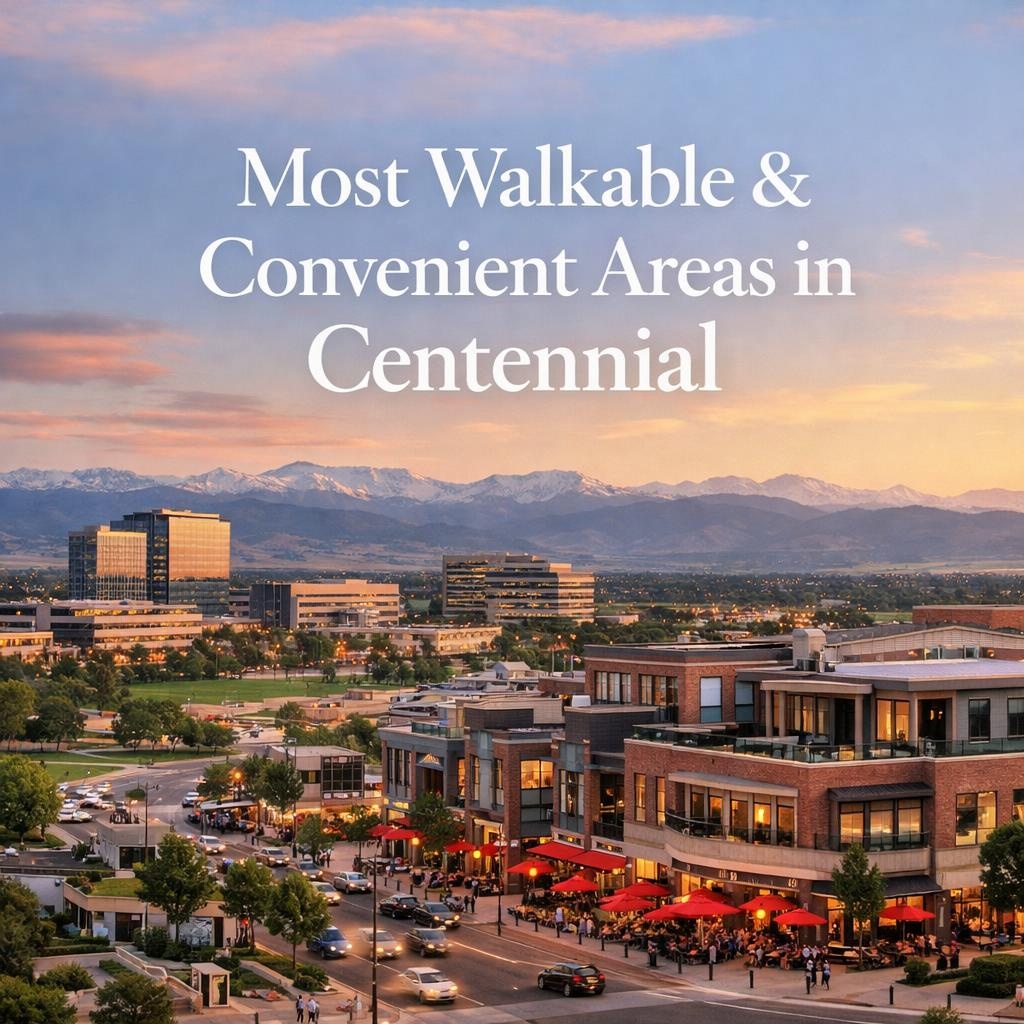
This guide is part of our complete Centennial Real Estate Guide → [Centennial Real Estate Guide]
Colorado’s suburban real estate market rewards buyers and sellers who prioritize daily functionality over scenic allure. In Centennial, a city straddling Arapahoe and Douglas counties south of Denver, walkability and convenience stand out as key differentiators amid lengthening commutes and variable weather patterns. These neighborhoods deliver practical advantages for ownership, from reduced driving time to resilient property values tied to essential services.
Why Walkability Matters in Centennial Real Estate
Walkability in Centennial translates directly to lower long-term ownership costs and higher quality of life for serious buyers. Families and professionals avoid the hidden expenses of car dependency, such as fuel amid fluctuating gas prices and maintenance in Colorado’s dry climate. Properties near shops, schools, and transit hold steadier values because demand persists even during market slowdowns, as buyers weigh time savings against higher upfront prices.
Convenience reduces exposure to Denver metro traffic congestion on I-25 and E-470, where rush-hour delays routinely add 30-45 minutes. Sellers benefit from faster turnover, as thoughtful buyers prioritize these areas for their alignment with hybrid work schedules and school drop-offs. In a market favoring balanced inventory, walkable spots command premiums without the volatility of remote exurbs.
Top Walkable Neighborhoods Near Downtown Centennial
Centennial’s core around South Broadway offers the strongest walkability scores, blending mid-century ranch homes with newer townhomes. These areas score high on metrics like proximity to grocery stores and parks, appealing to relocating homeowners seeking immediate usability.
Knolls and Centennial Knolls
The Knolls exemplifies walkable convenience with sidewalks lining quiet streets to Centennial Civic Center Park and daily errands. Residents reach King Soopers and medical offices within a 10-minute stroll, minimizing winter drives when snow compacts roads. Single-family homes here, averaging 2,500 square feet on quarter-acre lots, appreciate steadily due to limited supply and school district strength in Littleton Public Schools.
Ownership costs remain manageable, with property taxes around 0.7% of assessed value supporting robust municipal services. Buyers from out-of-state value the separation from urban density, yet quick RTD bus access to downtown Denver keeps commutes viable at 25-35 minutes.
Broadway Heights and Vicinity
Broadway Heights centers on the bustling South Broadway corridor, where mixed-use developments integrate retail and housing. Walk to Ace Hardware, coffee shops, and the Centennial Center for the Arts without a car, ideal for empty-nesters downsizing. Townhomes and duplexes predominate, offering low-maintenance exteriors suited to Colorado’s freeze-thaw cycles.
This pocket attracts repeat buyers for its transit links via the RTD 0 bus line, cutting E-470 toll reliance. Resale values hold firm because convenience buffers against interest rate hikes, drawing professionals from tech hubs like Centennial’s Arapahoe County offices.
Convenient Suburbs Adjacent to Centennial
Expanding slightly beyond city limits reveals suburbs with seamless walkability tied to Centennial’s infrastructure. These areas leverage shared school districts and commercial hubs, providing value for sellers timing market entries.
Littleton North and Historic Downtown Littleton
Just west across Santa Fe Drive, Littleton North mirrors Centennial’s appeal with dense sidewalks to the farmers market and light rail station. Homes from the 1950s feature mature trees and front porches, fostering community ties that enhance long-term retention. Walkability here means 15-minute access to Aspen Grove shopping center, reducing grocery runs amid busy schedules.
Commute patterns favor this zone: 20 minutes to Denver Tech Center via C-470, avoiding I-25 bottlenecks. Ownership appeals to families for low vacancy risks in rentals, as demand from DTC workers sustains yields around 4-5%.
Highlands Ranch Core Villages
Highlands Ranch, immediately southwest, structures its villages around walkable town centers like Northridge and Westridge. Trails connect to Chatfield State Park edges, but daily needs—Publix, urgent care, and schools—fall within half-mile radii. Detached homes on smaller lots balance space with accessibility, suiting multigenerational households.
Douglas County location means slightly lower taxes than Arapahoe, yet shared water rights ensure reliability during droughts. Buyers prioritize these villages for resale ease, as remote work amplifies the value of nearby amenities over distant mountain views.
Note: Walk scores derived from integrated urban planning; prices reflect gradual 2025 stabilization.
Ownership Costs and Buyer Behavior in Walkable Areas
Colorado’s high property insurance rates, driven by wildfire risks in surrounding foothills, underscore the prudence of walkable choices. These neighborhoods lower utility bills through shorter drives and access to community solar incentives in Arapahoe County. Serious buyers calculate total costs, factoring 1-2% annual maintenance plus HOA fees averaging $200 monthly for snow removal.
Market psychology shifts here: sellers price realistically, knowing convenience attracts multiple offers without bidding wars. Relocators from coastal markets appreciate transparent disclosures on water usage restrictions, common in older stock. Trends show 10-15% faster sales velocity compared to car-dependent outskirts.
Weather influences behavior—spring mud and fall leaves demand paved paths, which these areas provide. Hybrid workers test walkability during visits, prioritizing it over square footage as work-from-home persists.
Market Trends Impacting Walkable Centennial Properties
Colorado’s 2025 housing shows seasonal balance, with increased listings in suburbs like Centennial easing pressure. Median prices stabilize around 1-2% growth, favoring walkable inventory as affordability caps buyer budgets. Suburban demand rises with remote work, boosting areas near DTC offices.
Sellers prepare by highlighting transit maps and errand logs in listings. Buyers negotiate on inspections, focusing on roof longevity against high-altitude UV exposure. Long-term value accrues from demographic stability—professionals aged 35-55 dominate, ensuring steady appreciation.
Infrastructure and Future-Proofing Walkability
Centennial invests in RTD expansions, linking these neighborhoods to DIA and light rail extensions by 2030. Sidewalk infill and bike lanes along Dry Creek Trail enhance resilience to gas price volatility. Buyers assess flood plain maps, as Platte River proximity affects basements in older homes.
HOAs maintain green spaces, buffering resale against overdevelopment. This foresight appeals to thoughtful sellers timing exits amid inventory growth.
Conclusion
Walkable and convenient areas in Centennial and nearby suburbs offer pragmatic advantages for enduring ownership in Colorado’s dynamic market. Proximity to essentials preserves time and equity, aligning with buyer priorities amid stabilizing prices and commute realities. These locales demonstrate how functionality drives value over flash.
Consult a local real estate advisor familiar with Arapahoe County nuances to evaluate specific properties. Schedule a targeted tour of Knolls or Highlands Ranch villages to assess fit for your needs.



How Zoning, Lot Size, and Layout Impact Investment Flexibility in Lakewood
This guide is part of our complete Lakewood Real Estate Guide → [Lakewood Real Estate Guide] Lakewood’s real estate market rewards investors who understand how physical and regulatory constraints shape property potential. Zoning dictates allowable uses, lot size determines expansion room, and layout influences adaptability for rentals or resale. These factors directly affect holding periods, renovation…


Appreciation-First vs Cash-Flow-First Investing in Lakewood
This guide is part of our complete Lakewood Real Estate Guide → [Lakewood Real Estate Guide] Appreciation-First vs Cash-Flow-First Investing in Lakewood Lakewood’s real estate market sits at a crossroads for investors, balancing steady price appreciation from Denver metro demand against the potential for reliable rental income in a suburb with strong tenant pools. Properties here…

What First-Time Buyers Regret Most After Buying Older Homes in Lakewood
This guide is part of our complete Lakewood Real Estate Guide → [Lakewood Real Estate Guide] What First-Time Buyers Regret Most After Buying Older Homes in Lakewood First-time buyers in Lakewood often target older homes for their affordability and established neighborhoods, but these properties frequently reveal hidden challenges that affect long-term ownership. Many built between the…
 Mile High Home Group - Welcome to Denver
Leave a comment