

This guide is part of our complete Parker Real Estate Guide → [Parker Real Estate Guide]
Parker’s real estate market pits established downtown charm against expanding newer communities like Stroh Ranch and Parker Highlands, each appealing to distinct buyer priorities in the Denver metro’s southeast suburbs. Downtown offers walkable Main Street vibes with historic homes, while newer developments promise modern builds and amenities amid constrained regional inventory. Buyers weigh long-term value through ownership costs, commute reliability, and resale potential, often favoring one over the other based on family stage and risk tolerance.
Downtown Parker’s Enduring Appeal for Value-Seeking Buyers
Downtown Parker centers on 1960s-1980s ranchers and two-stories along Parker Road, where proximity to retail and Otero Junior College sustains demand from local professionals.
Walkability and Community Fabric
Properties here command premiums for pedestrian access to 20+ shops and eateries, reducing car dependency in a suburb where 70% of residents drive 15-25 minutes to DTC offices via C-470. This matters because resale liquidity thrives on neighborhood permanence—homes turn over every 7-10 years, with 3-5% annual appreciation outpacing inflation, driven by low turnover in tight-knit blocks.
Buyers value the intangible cohesion: block parties and school proximity in Douglas County RE-1 boost family retention, minimizing vacancy risks for future owners.
Trade-Offs in Older Housing Stock
Mid-century builds feature solid brick exteriors but demand scrutiny for freeze-thaw foundation shifts on clay soils. Ownership costs skew higher—Douglas County’s 0.55% tax rate yields $3,000-$4,500 yearly on $600,000 medians, plus $2,500 insurance reflecting snow loads. Yet, larger lots (0.25+ acres) offer expansion equity, appealing to customizers over cookie-cutter seekers.
Newer Communities’ Modern Edge in Parker
Developments like Antebellum and Legend Oaks deliver 2010s-2020s townhomes and patricks, targeting relocators with warranties and HOA-managed upkeep.
Energy Efficiency and Low-Maintenance Design
Newer homes incorporate ICF construction and smart thermostats, slashing Xcel winter bills 20-30% below downtown averages ($200-300 monthly). This efficiency underpins value for busy executives commuting to Centennial Airport (10-15 minutes), where time savings compound over 10-year holds.
HOAs at $150-300 quarterly handle snow plowing—critical in Parker’s 50+ inch snowfall—freeing owners from seasonal labor and preserving curb appeal for 4-6% cap rates on rentals.
Density and Scalability Concerns
Higher density (8-12 units/acre) raises flags for privacy-focused buyers; shared walls amplify noise in a market where 60% seek single-family isolation. Resale depends on developer momentum—inventory swells to 3-4 months during phases, softening prices 1-2% versus downtown stability.
Commute Patterns Shaping Buyer Choices
Parker’s east Douglas County location demands commute alignment, influencing perceived value profoundly.
Access to Denver Metro Hubs
Downtown edges I-25 at 20-30 minutes to downtown Denver, ideal for hybrid workers valuing O-470 express lanes during peak snow. Newer eastside communities cut E-470 runs to Inverness (12 minutes) but extend DIA treks to 40+ amid construction.
Buyers from tech (Oracle) or healthcare prioritize this: downtown suits traditionalists, newer fits growth-oriented relocators eyeing Parker Adventist Hospital expansions.
Ownership Costs Comparison in Parker
Parker’s costs average 30-40% of income, with weather amplifying maintenance universally.
Downtown’s higher entry yields equity via land, while newer trims outflows for yield-focused owners. Reserves at 1-2% value cover both, but downtown’s custom potential recoups via 5-7% flips.
Buyer Behavior and Market Psychology
Local families (55%) anchor downtown for school draw—Chaparral High feeds loyalty—while out-of-state inflows (35%) chase newer warranties amid 6.5-7% rates.
Downtown buyers exhibit patience, holding through cycles for 10%+ compounded gains; newer appeal to flippers betting builder incentives. Inventory at 2.5 months favors downtown scarcity, but newer phases grant negotiation (1-2% concessions).
Resale Potential and Long-Term Value
Downtown’s historic cachet sustains 4-6% appreciation, bolstered by Main Street revitalizations drawing foot traffic. Newer communities ride infrastructure like Parker Road widenings but risk oversupply if metro cools.
Hybrids emerge: downtown-adjacent new builds blending both. Value tilts to downtown for permanence seekers, newer for efficiency prioritizers—choice hinges on 5-15 year horizons.
| Value Driver | Downtown Parker Score (1-10) | Newer Communities Score | Key Differentiator |
|---|---|---|---|
| Appreciation Potential | 9 | 7 | Scarcity vs phasing |
| Maintenance Burden | 6 | 8 | Owner vs HOA |
| Commute Flexibility | 8 | 7 | Legacy access |
| Customization Room | 9 | 5 | Lots vs CC&Rs |
| Resale Liquidity | 8 | 9 | Turnover rates |
This matrix reveals downtown’s edge in wealth-building, newer in hassle-free entry.
Parker’s split reflects deliberate buyer calculus: downtown for rooted equity, newer for streamlined living amid Colorado’s growth pressures. Understanding these dynamics clarifies where true value resides.
Ready to compare downtown Parker homes against newer community options with current comps and cost projections? Reach out today for a personalized value analysis tailored to your priorities.



When Luxury Buyers Walk Away in Parker — Even at the Right Price
This guide is part of our complete Parker Real Estate Guide → [Parker Real Estate Guide] Parker’s luxury market, centered on estates above $1 million in Douglas County, attracts high-net-worth buyers drawn to its equestrian heritage and 20-30 minute commutes to Denver’s tech and aerospace hubs. Yet even when priced competitively against comps, these buyers often…

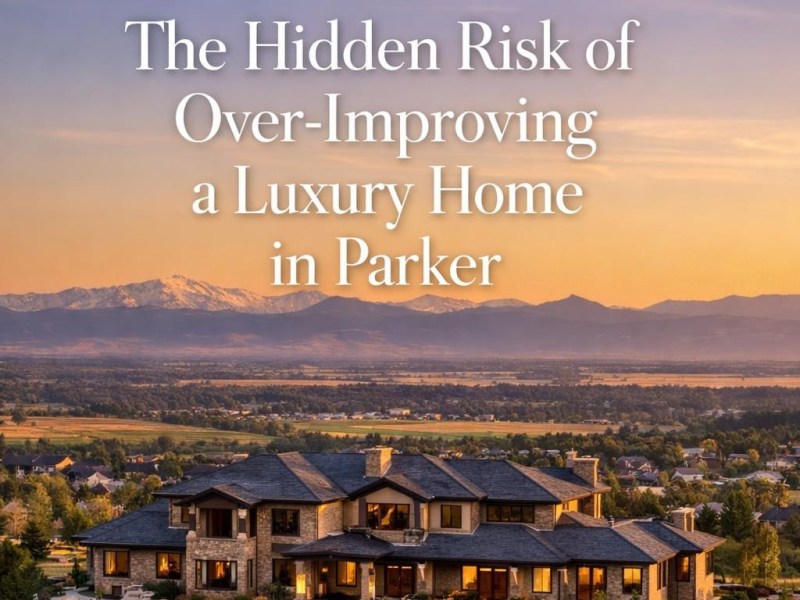
The Hidden Risk of Over-Improving a Luxury Home in Parker
This guide is part of our complete Parker Real Estate Guide → [Parker Real Estate Guide] Parker, positioned southeast of Denver in Douglas County, attracts luxury buyers with its equestrian estates and master-planned communities, where homes often exceed $1.2 million. Owners frequently invest heavily in upgrades, drawn by spacious lots and rural-suburban appeal, only to face…
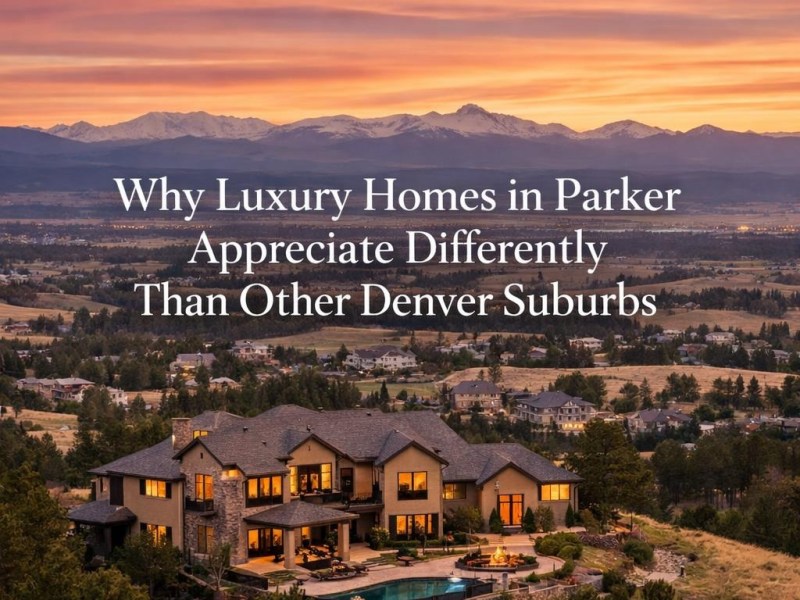
Parker vs Other Denver-Area Suburbs: Value Comparison
This guide is part of our complete Parker Real Estate Guide → [Parker Real Estate Guide] Why Luxury Homes in Parker Appreciate Differently Than Other Denver Suburbs Parker’s luxury homes, typically priced above $1 million in neighborhoods like Stroh Ranch and Crystal Lake, follow distinct appreciation patterns compared to peers like Cherry Hills Village or Greenwood…
 Mile High Home Group - Welcome to Denver
Leave a comment