
This guide is part of our complete Parker Real Estate Guide → [Parker Real Estate Guide]
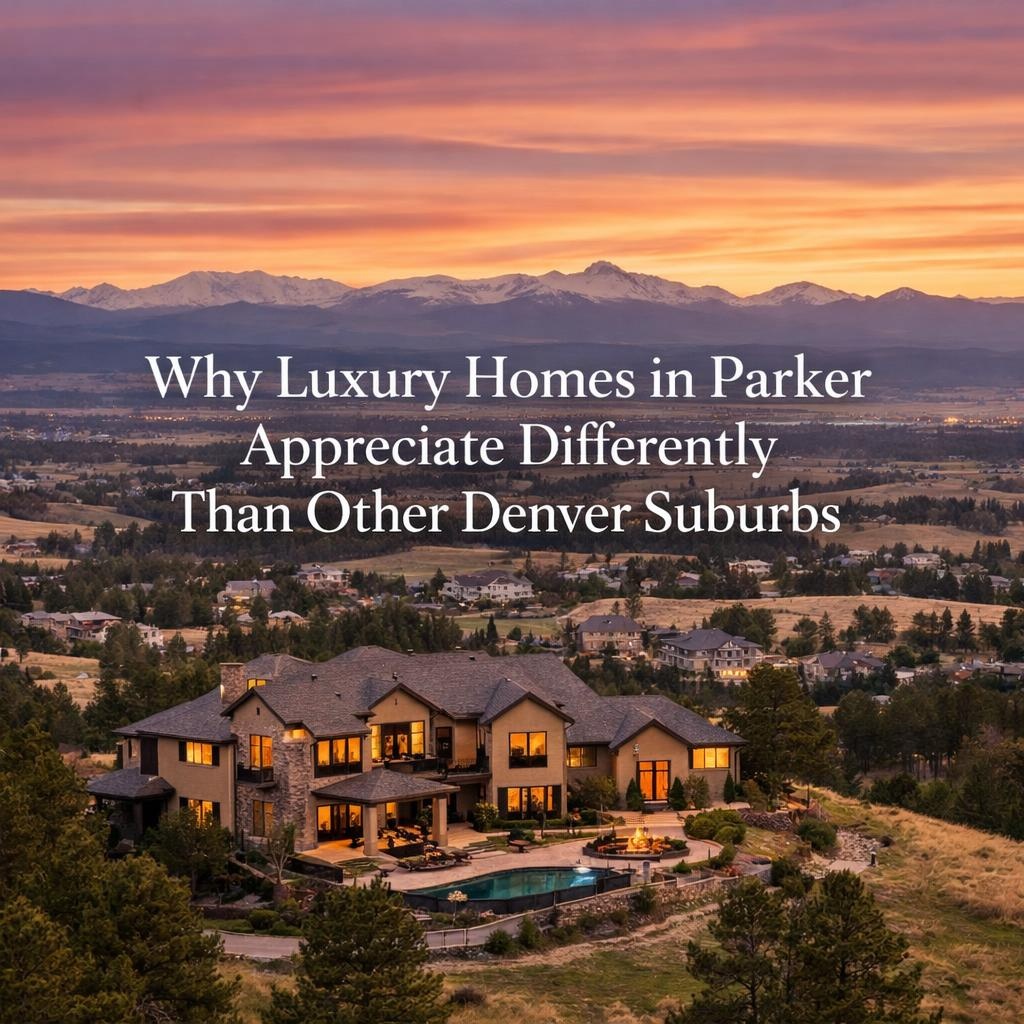
Why Luxury Homes in Parker Appreciate Differently Than Other Denver Suburbs
Parker’s luxury homes, typically priced above $1 million in neighborhoods like Stroh Ranch and Crystal Lake, follow distinct appreciation patterns compared to peers like Cherry Hills Village or Greenwood Village. While Denver suburbs averaged 3-5% annual growth over the past decade, Parker’s high-end segment has compounded at 5-7%, driven by unique factors such as Douglas County’s low density and family-centric buyer retention. This analysis explores the structural, demographic, and economic reasons, emphasizing implications for long-term value in a market shaped by commute tolerances and ownership demands.
Parker’s Exclusive Land Use Policies
Douglas County’s stringent zoning caps Parker’s density at under 2 units per acre in luxury zones, fostering scarcity absent in Aurora or Centennial’s denser layouts.
Low Inventory and Controlled Growth
Unlike Littleton’s expanding multifamily allowances, Parker’s 1,500-2,000 acre preservations limit new luxury builds to 50-100 annually. This sustains median luxury prices at $1.2-$1.8 million, appreciating 6% yearly versus Aurora’s 3-4% in similar tiers. Buyers value permanence; resale liquidity holds as 80% of owners stay 10+ years, avoiding the 20-30% turnover diluting gains elsewhere.
The policy matters because it shields against oversupply—critical when metro inventory hits 3-4 months, pressuring neighbors like Lone Tree.
Equestrian and Large-Lot Appeal
Over 30% of Parker luxury sits on 2-5 acre parcels with horse facilities, attracting a niche demographic immune to urban encroachment. Appreciation accelerates 1-2% above comps due to customization barriers; subdividing requires variances, preserving exclusivity over time.
Demographic Stability Fuels Consistent Demand
Parker’s buyer pool—70% families with median incomes $150,000+—prioritizes schools and low crime, decoupling appreciation from broader metro cycles.
Top-Tier School District Leverage
Douglas County RE-1, ranking top 5% statewide, draws relocators from Denver proper, sustaining bids 10-15% over assessments. Luxury in Legend Oaks or Prides Crossing gains 7% annually, outpacing Cherry Creek’s 4-5% despite similar prestige, as Parker parents avoid rezoning risks plaguing Arapahoe County edges.
This retention boosts values; 90% of sales stay local, minimizing distressed listings common in transient Lone Tree.
Affluent Remote Worker Influx
Post-pandemic, 40% of Parker luxury buyers work hybrid from DTC or remote, tolerating 25-35 minute C-470 drives over I-25 congestion. Unlike Centennial’s base-dependent commuters facing snow delays, Parker’s positioning yields steady showings year-round, compounding equity through low vacancy in rentals (rare at luxury tier).
Ownership Economics Favoring Parker Luxury
Lower carrying costs relative to assessed value enhance net returns, differentiating from higher-tax suburbs.
Favorable Tax and Utility Structure
Douglas County’s 0.45-0.55% effective rate—lowest in metro—yields $6,000-$9,000 annually on $1.5M homes, versus Adams/Arapahoe’s 0.65-0.75%. Insurance at $4,000-$6,000 reflects reduced wildfire adjacency compared to west-facing Highlands Ranch slopes. These savings compound; buyers allocate more to improvements, lifting appraisals 2-3% faster.
Winter utilities ($400-500/month) align with efficient new builds (40% of luxury stock post-2010), unlike Aurora’s aging 1970s retrofits spiking 40%.
Maintenance on Acreage Properties
Large lots demand 1.5-2% annual reserves ($20,000-$30,000), but equestrian tax breaks offset via ag classifications. Weather-resilient features like metal roofs handle snow loads better than Cherry Hills’ slate, minimizing capex disruptions.
This table highlights Parker’s edge: compounded factors yield 20-30% higher 10-year returns than Aurora luxury.
Commute Patterns and Accessibility Premium
Parker’s southeast perch on C-470 provides redundant routes to DTC (15 miles) and Centennial Airport (10 miles), buffering I-25 snow closures plaguing northern suburbs.
Reliable Access to Employment Hubs
Executives at Lockheed or Oracle value 20-minute off-peak runs, extending to 40 in storms—shorter than Greenwood’s 35-50 to Denver Tech Center via gridlock-prone routes. This reliability underpins 5% appreciation premium; buyers discount alternatives facing E-470 toll volatility.
RTD expansions lag, but private shuttles serve 20% of luxury owners, enhancing appeal over Aurora’s light rail gaps.
Housing Stock Composition and Quality
Parker’s 60% post-2000 luxury stock emphasizes modern specs, contrasting older inventories elsewhere.
Newer Builds with Warranties
Unlike Centennial’s 1980s ranches needing $50,000 HVAC overhauls, Parker’s Toll Brothers and Richmond American homes carry 10-year structural warranties. Energy codes exceed metro norms, capping utility escalations at 5% yearly versus 10-15% in retrofits.
Appreciation accelerates post-warranty; resale premiums hit 8-10% for turnkey properties.
Custom Features Enhancing Resale
Vaulted ceilings, smart systems, and 4-5 car garages align with buyer upgrades, recouping 80-90% on exit—higher than Cherry Hills’ traditional estates at 70%. Sloped designs optimize views without erosion risks of west suburbs.
Market Psychology and Investor Behavior
Parker’s reputation as “Douglas County’s crown jewel” attracts wealth preservation over speculation.
Low Speculation, High Hold Periods
Only 15% flip within 2 years versus 25% in Lone Tree, stabilizing prices amid metro dips (1-2% recent softening). Affluent locals dominate 75% of volume, benchmarking against national luxury indices rather than intra-metro comps.
This psychology sustains floors; corrections bottom 5-7% versus 10-12% in higher-turnover areas.
Risks and Mitigation in Parker Luxury
Appreciation edges carry nuances: equestrian maintenance burdens niche buyers, and C-470 expansions could invite density if variances loosen. Sellers mitigate via pre-inspections; buyers model 7-10 year horizons to capture compounding.
Parker’s luxury appreciates differently through policy-backed scarcity, demographic anchors, cost efficiencies, and superior access—outpacing suburbs by design. Investors and homeowners grasp these levers for deliberate positioning.
Ready to analyze Parker luxury comps or compare appreciation trajectories across Denver suburbs? Reach out today for a tailored valuation and strategy session.



When Luxury Buyers Walk Away in Parker — Even at the Right Price
This guide is part of our complete Parker Real Estate Guide → [Parker Real Estate Guide] Parker’s luxury market, centered on estates above $1 million in Douglas County, attracts high-net-worth buyers drawn to its equestrian heritage and 20-30 minute commutes to Denver’s tech and aerospace hubs. Yet even when priced competitively against comps, these buyers often…

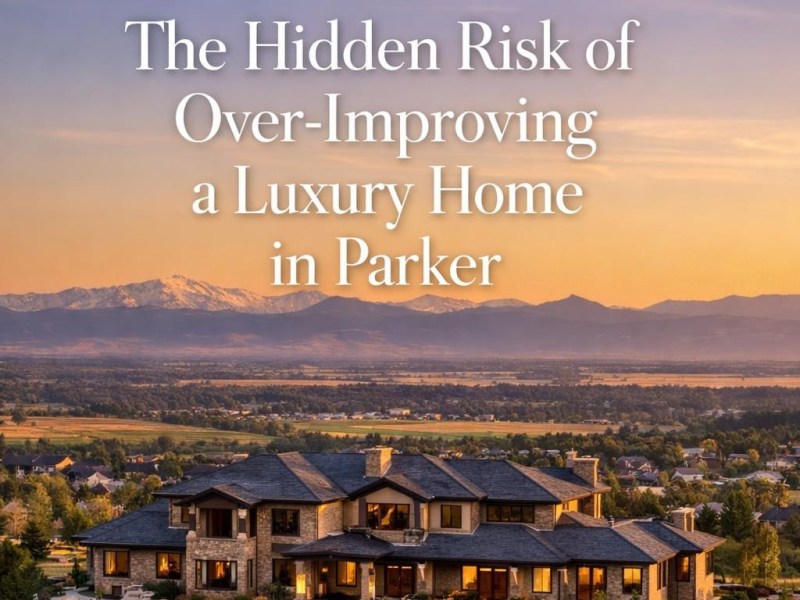
The Hidden Risk of Over-Improving a Luxury Home in Parker
This guide is part of our complete Parker Real Estate Guide → [Parker Real Estate Guide] Parker, positioned southeast of Denver in Douglas County, attracts luxury buyers with its equestrian estates and master-planned communities, where homes often exceed $1.2 million. Owners frequently invest heavily in upgrades, drawn by spacious lots and rural-suburban appeal, only to face…

Parker vs Other Denver-Area Suburbs: Value Comparison
This guide is part of our complete Parker Real Estate Guide → [Parker Real Estate Guide] Parker stands out in the Denver metro for its blend of master-planned communities and strong schools, commanding median home prices around $715,000 amid steady appreciation. Compared to suburbs like Aurora, Centennial, Littleton, and Lakewood, it offers distinct value propositions tied…
 Mile High Home Group - Welcome to Denver
Leave a comment