
This guide is part of our complete Parker Real Estate Guide → [Parker Real Estate Guide]
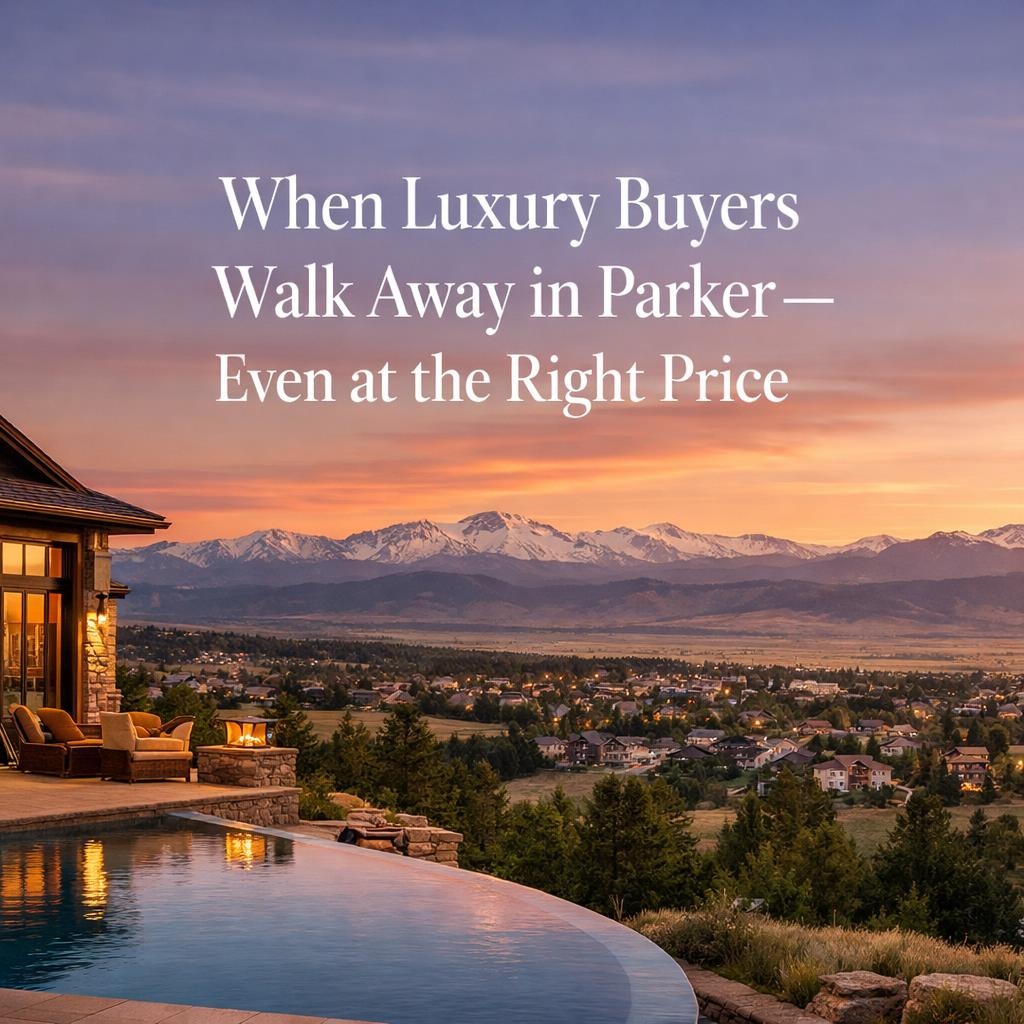
Parker’s luxury market, centered on estates above $1 million in Douglas County, attracts high-net-worth buyers drawn to its equestrian heritage and 20-30 minute commutes to Denver’s tech and aerospace hubs. Yet even when priced competitively against comps, these buyers often abandon deals, citing non-price factors like property condition, long-term viability, and ownership burdens unique to the area’s topography and climate. This examination reveals the underlying drivers, informed by local trends in buyer selectivity and market softening.
Structural Vulnerabilities in Parker’s Premium Properties
Luxury homes in Parker, often custom builds on 2-5 acre lots in neighborhoods like Pradera or Stonegate, reveal hidden flaws during due diligence that override attractive pricing.
Foundation and Soil Challenges
Parker’s rolling terrain sits on expansive soils prone to swelling and shrinking with Colorado’s wet-dry cycles, causing differential settling in large-footprint homes. Buyers—frequently executives from Centennial Airport or Lockheed Martin—identify heaving slabs or bowed walls via engineering reports, facing $30,000-$75,000 remediation costs. These defects matter because they signal ongoing risks to structural integrity, complicating insurance renewals and resale appraisals in a market where banks demand certified fixes.
Sloped sites amplify drainage issues; poor grading leads to erosion gullies after heavy spring melts, a red flag for those budgeting 1.5-2.5% of value annually for upkeep.
Aging Mechanicals in Sprawling Estates
Many 1990s-2010s luxury properties feature oversized systems strained by Parker’s elevation and temperature swings—from sub-zero winters to 90-degree summers. Inefficient boilers and zoning imbalances hike heating bills to $500-800 monthly, prompting walkaways when sellers balk at $20,000-$40,000 upgrades. Buyers prioritize energy modeling for net-zero goals, viewing dated setups as liabilities against rising utility rates from Xcel Energy.
Neighborhood and Zoning Concerns Prompting Exits
Parker’s appeal as a semi-rural enclave falters when buyers scrutinize future land use and community dynamics.
Equestrian Zoning and Density Creep
High-end buyers target horse-friendly parcels in The Pinery, but Douglas County growth plans introduce mixed-use nodes along Parker Road, threatening open space. Research uncovers potential annexations or density bonuses that could add traffic on Crowfoot Valley Road or diminish privacy buffers. This foresight drives pullbacks; luxury value hinges on scarcity, eroded by 10-15 year projections of suburban infill.
Douglas County schools sustain premiums in zones like Chaparral High, but boundary shifts deter families weighing district stability over immediate square footage.
Commute Realities and Remote Work Shifts
Test drives expose variability: 25 minutes to DTC via C-470 in ideal conditions stretch to 45+ during snow on unplowed rural stretches. Post-pandemic hybrid schedules demand dedicated workspaces; homes lacking fiber optics or poor cell coverage in foothill pockets lose ground. Buyers exit priced-right listings because aggregated time costs—factoring E-470 tolls—undermine the “convenient country” narrative.
Ownership Economics Undermining Luxury Deals
Parker’s low density elevates fixed costs, consuming 25-35% of affluent household budgets and triggering reconsiderations.
Tax and Insurance Pressures in Douglas County
At a 0.45-0.55% effective rate, a $1.2M home incurs $5,500-$6,500 yearly taxes, with reassessments accelerating on vacant land premiums. Insurance runs $4,000-$6,000, inflated by wildfire adjacency in Douglas County’s wildland-urban interface and wind exposure on exposed roofs. These escalate faster than metro averages, pressuring buyers modeling lifestyle sustainability.
HOAs in golf communities like Country Club at Castle Pines add $5,000-$10,000 annually, restricting lot alterations like solar arrays—frustrating eco-conscious relocators.
Maintenance Demands of Acreage Living
Expansive lawns and outbuildings require $20,000-$35,000 yearly reserves, as dry winds accelerate siding fade and freeze cycles crack driveways. Septic systems, prevalent outside city limits, demand $1,500 inspections revealing $15,000+ overhauls. Buyers walk when totals project 10-14% of value, clashing with expectations of passive luxury.
The table highlights why economics alone deter; perceived frictions outweigh price concessions.
Due Diligence Discoveries Leading to Withdrawals
Inspections unearth deal-breakers in Parker’s older luxury stock.
Well, Septic, and Environmental Hurdles
Private wells test positive for contaminants 10-15% of time, requiring $10,000-$20,000 treatments amid tightening water rights. Septic failures in high-percolation soils demand engineered replacements at $25,000+. Phase II environmental probes flag historical ag uses, delaying closings despite clean records.
Layout and Customization Barriers
Circus-maximus floor plans with formal dining underutilized by modern families prompt reconfiguration quotes exceeding $60,000. South-facing slopes overheat without shading, a non-starter for passive cooling seekers. Even at market price, adaptation costs fuel exits for bespoke builds elsewhere.
Buyer Psychology in Parker’s Softening Luxury Tier
With 3.5-4.5 months inventory, choosiness prevails amid metro balance.
Benchmarking Against Centennial and Castle Rock
Buyers pit Parker against smoother alternatives: newer warranties in Sterling Ranch or urban polish in Lone Tree. Recent 1-2% price moderation empowers holding out, as lot privacy or noise from Meridian Road trumps discounts. Out-of-state influx (35%) applies coastal standards, rejecting “rustic luxury.”
Financing and Timing Sensitivities
Jumbo loans at 6.75-7.25% amplify appraisal gaps on unique features; rural setbacks undervalue horse arenas. Year-end slowdowns push days on market to 50-70, convincing buyers of pending concessions.
Seller Responses to Stem Luxury Walkaways
Preemptive strategies include third-party inspections with escrow credits, prorated taxes, and virtual staging highlighting C-470 access. Price 3-4% below comps to buffer intangibles, marketing to local C-suite over transients.
Parker’s luxury defections arise from structural truths, cost forecasts, and permanence doubts—not pricing alone. Navigating these equips sellers for closure and buyers for informed pursuit.
Ready to diagnose walkaway risks on your Parker luxury listing or evaluate hidden costs? Reach out today for a targeted property assessment and strategy session.


The Hidden Risk of Over-Improving a Luxury Home in Parker
This guide is part of our complete Parker Real Estate Guide → [Parker Real Estate Guide] Parker, positioned southeast of Denver in Douglas County, attracts luxury buyers with its equestrian estates and master-planned communities, where homes often exceed $1.2 million. Owners frequently invest heavily in upgrades, drawn by spacious lots and rural-suburban appeal, only to face…

Parker vs Other Denver-Area Suburbs: Value Comparison
This guide is part of our complete Parker Real Estate Guide → [Parker Real Estate Guide] Why Luxury Homes in Parker Appreciate Differently Than Other Denver Suburbs Parker’s luxury homes, typically priced above $1 million in neighborhoods like Stroh Ranch and Crystal Lake, follow distinct appreciation patterns compared to peers like Cherry Hills Village or Greenwood…

Parker vs Other Denver-Area Suburbs: Value Comparison
This guide is part of our complete Parker Real Estate Guide → [Parker Real Estate Guide] Parker stands out in the Denver metro for its blend of master-planned communities and strong schools, commanding median home prices around $715,000 amid steady appreciation. Compared to suburbs like Aurora, Centennial, Littleton, and Lakewood, it offers distinct value propositions tied…
 Mile High Home Group - Welcome to Denver
Leave a comment