


To get more information on the Denver Market→ [Current Market Insights] & About the Buying Process in Denver Metro→ [Denver Metro Home Buying Process]
In the Denver metro market, waiting for mortgage rates to drop can quietly cost you more than it saves, especially in terms of total ownership cost, missed negotiation leverage, and long‑term appreciation. In Colorado’s current environment—where prices have cooled but remain structurally high, and rates are elevated but drifting down—the bigger risk for serious buyers is paralysis, not overpaying.
How Colorado’s Market Really Works With Higher Rates
Denver’s housing market has moved from a frenzy to a more balanced, data-driven environment as inventory has climbed to the highest levels in over a decade. Median home prices sit around the high‑$500,000s to low‑$600,000s, down modestly from their 2022 peak but still well above national averages, reflecting long‑term demand for the Front Range.
This matters because a “slow” Colorado market is not the same as a weak one; it is a phase where buyers finally gain time and leverage without a corresponding collapse in values. For thoughtful buyers, this window allows more meaningful due diligence on neighborhoods, commute patterns, and long‑term fit, rather than scrambling to win in the first weekend.
The Myth of “I’ll Buy When Rates Drop”
Many Colorado buyers are sitting on the sidelines waiting for mortgage rates to fall a full percentage point or more before they “finally buy.” On the surface, this seems rational—lower rates mean lower payments—but in a market like Denver, that logic misses how prices and competition respond to cheaper money.
Historically, when borrowing costs fall, more buyers return at once, especially in high-demand metros with limited buildable land and strong job bases like Denver. That surge of demand tends to put upward pressure on prices, absorbing any monthly payment savings from the rate drop and, in some cases, pushing total cost even higher.
Why “Waiting for the Perfect Rate” Backfires
- By the time rates fall enough to feel meaningful, more buyers pile in, multiple offers return, and sellers regain pricing power.
- Even a modest 2–4% increase in prices on a $600,000 home can erase the benefit of a minor rate reduction, especially when you factor in higher property taxes on the new assessed value.
- You forgo months—or years—of principal paydown and potential appreciation while you wait, which is a real cost that rarely shows up in online calculators.
What Rising Inventory Really Means for You
In 2025, Denver’s active listings nearly doubled compared with prior years, reaching levels not seen since around 2011–2012. For buyers, that translates into more choice, less urgency, and a greater ability to negotiate on inspection items, concessions, and closing timelines.
For sellers, this higher inventory environment punishes overpricing and deferred maintenance, but well-prepared homes in desirable suburbs like Highlands Ranch, Littleton, and Arvada still move efficiently when priced correctly. The key is that the market is no longer driven by panic buying; it is driven by realistic pricing and clear value.
Payment vs. Price: The Tradeoff You Actually Face
Most rate conversations focus only on the monthly payment, but Colorado buyers should weigh payment against purchase price, negotiation leverage, and long‑term holding period. When rates are higher, you may pay more each month initially, but you often buy at a softer price with better terms—particularly in the $600,000–$900,000 range common in many Denver suburbs.
When rates drop, the dynamic flips: monthly payments improve, but prices and competition typically rise, and sellers become less flexible on repairs or credits. In practice, the “higher rate, better price” environment can create a more favorable long‑term outcome than “lower rate, higher price” once appreciation and the option to refinance are factored in.
The Refinance Option: Why Timing the Rate Perfectly Is Overrated
Current Colorado mortgage rates on 30‑year fixed loans hover in the mid‑6% range, only slightly below national averages. Forecasts from major housing analysts suggest modest declines over the next couple of years rather than a dramatic return to the ultra‑low rates of 2020–2021.
This matters because buyers today can treat the current rate as a starting point, not a life sentence. If you secure the right home at a fair price now, you retain the option to refinance later if rates drift down, while locking in today’s value and starting equity growth immediately.
Colorado-Specific Ownership Realities to Factor In
Owning in Denver, Highlands Ranch, or nearby suburbs includes costs beyond principal and interest: property taxes, homeowners insurance, utilities, and maintenance in a four-season climate. The state’s property tax environment has been in flux in recent years, and higher valuations during the pandemic translated into noticeable jumps in tax bills for many homeowners.
Long‑term, though, the same forces that keep Colorado expensive—population growth, limited central land, outdoor-oriented employers, and constrained new construction in key corridors—also support price stability. For buyers planning to hold a home for 7–10 years, these structural realities often matter more than whether the initial rate is 6.7% or 6.2%.
How Waiting Changes Your Position as a Buyer
Loss of Negotiation Leverage
In today’s market, increased inventory and longer days on market allow Denver‑area buyers to negotiate inspection items, rate buydowns, and closing cost credits in ways that were nearly impossible a few years ago. As rates moderate and buyer demand returns, sellers are less likely to entertain aggressive inspection demands or large concessions, and “as is” sales become common again in prime neighborhoods.
Reduced Choice in the Best Micro‑Locations
Right now, there is unusually strong selection in established suburbs with good schools and reasonable commutes along C‑470, I‑25, and US‑36. If you wait until the next demand wave, the best‑located, best‑condition homes in these areas will be picked over first, leaving more compromises around road noise, layout, or deferred updates.
Opportunity Cost of Renting Longer
Colorado rents surged during the pandemic and have since leveled off, but they remain high relative to many markets with similar wages. Delaying a purchase means continuing to absorb 100% interest in the form of rent, while missing out on principal paydown and price appreciation that can materially improve your net worth over a decade.
Strategic Ways to Buy Now Without Ignoring Rates
Buying now does not mean ignoring affordability; it means using today’s conditions to your advantage instead of waiting for a perfect but unlikely scenario.
Consider several practical Colorado‑specific strategies:
- Target slightly less than your maximum budget to leave room for future tax, insurance, and utility increases, which can be significant in larger or older homes.
- Focus on structurally sound homes in solid school districts where cosmetic updates can be done over time, spreading out costs while still benefiting from neighborhood appreciation.
- Use seller concessions, which are more common in the current Denver market, to permanently buy down your rate or offset closing costs instead of simply pushing for a lower list price.
These approaches acknowledge today’s borrowing costs while taking advantage of the leverage and selection that come with a higher‑rate, higher‑inventory market.
When Waiting Does Make Sense
There are situations where waiting is rational, even in Colorado’s resilient market. If your income is unstable, your job situation is uncertain, or a likely relocation within a couple of years is on the horizon, pushing to buy now can create unnecessary risk.
Similarly, if your debt‑to‑income ratio is stretched to the point where maintenance, utilities, or property tax increases would put real pressure on your budget, taking another 6–12 months to strengthen your financial foundation is reasonable. The point is not to buy at any cost, but to avoid delaying for a rate fantasy while ignoring more important long‑term fundamentals.
A Clear Way to Think About Timing in Colorado
For serious buyers in the Denver metro and surrounding suburbs, the core question is not “Will rates drop?” but “What happens to my total position if I wait?” In a market where prices remain elevated, inventory has finally improved, and rates are drifting rather than collapsing, the opportunity is often in acting thoughtfully now—not holding out for conditions that may never align perfectly.
If you want to walk through how this applies to your specific situation—income, target neighborhoods, commute patterns, and time horizon—reach out to me directly so we can run the numbers, compare realistic scenarios, and decide whether buying now or waiting truly serves your long‑term goals in Colorado.


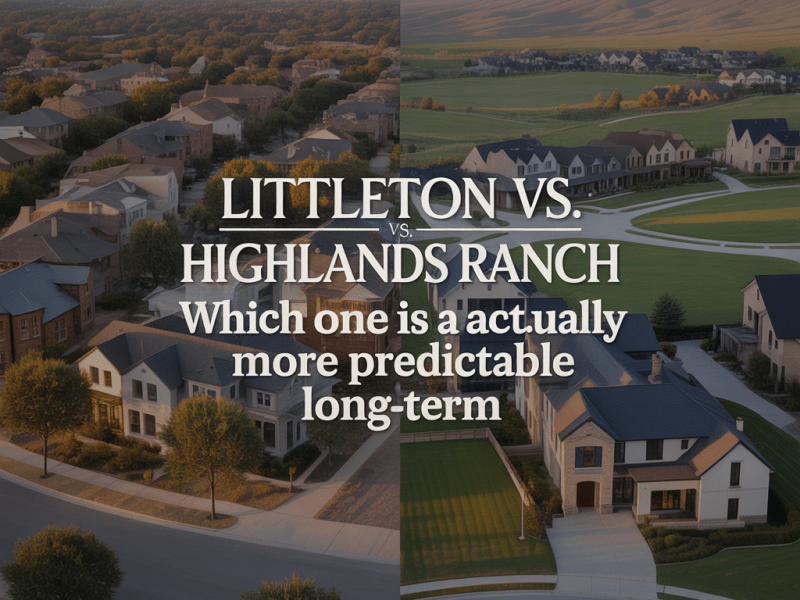
Littleton vs. Highlands Ranch: Which One Is Actually More Predictable Long-Term
To get more information on Highlands Ranch→ [Highlands Ranch] & To get more information on Littleton→ [Littleton] Colorado’s south metro suburbs draw serious buyers seeking stability amid Denver’s growth pressures. Littleton and Highlands Ranch stand out for their established housing stock and proximity to employment hubs, but predictability in real estate hinges on factors like value retention,…

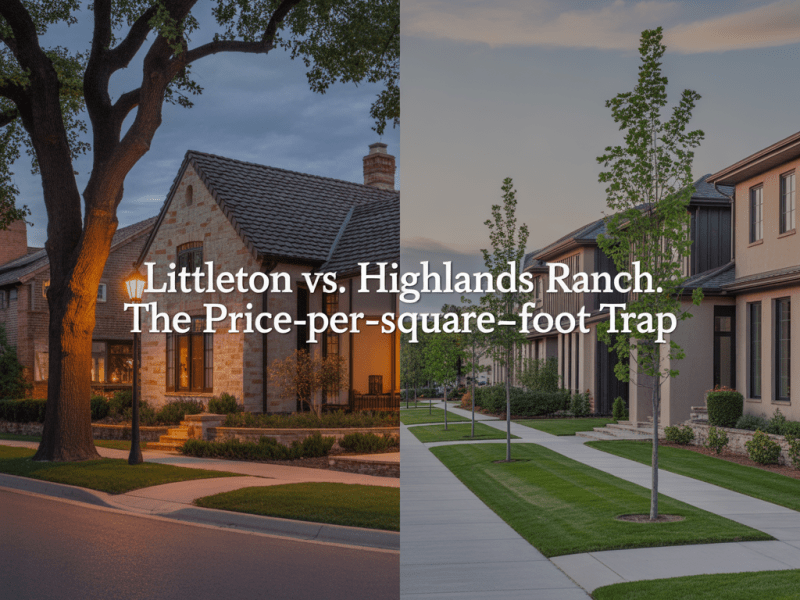
Littleton vs. Highlands Ranch: The Price-Per-Square-Foot Trap
To get more information on Highlands Ranch→ [Highlands Ranch] & To get more information on Littleton→ [Littleton] Buyers in the Denver metro area often compare Littleton and Highlands Ranch by focusing on price per square foot, assuming it reveals the best value. This metric can mislead because it overlooks differences in home quality, neighborhood governance, long-term costs,…

Littleton vs. Highlands Ranch: Appreciation vs. Lifestyle Value
To get more information on Highlands Ranch→ [Highlands Ranch] & To get more information on Littleton→ [Littleton] In the south Denver metro area, Littleton and Highlands Ranch stand out as prime choices for buyers and sellers weighing long-term financial returns against daily living quality. Littleton offers historic charm and superior urban access, while Highlands Ranch delivers master-planned…
 Mile High Home Group - Welcome to Denver
Leave a comment