

To get more information on Arvada→ [Arvada] & To get more information on Lakewood→ [Lakewood]
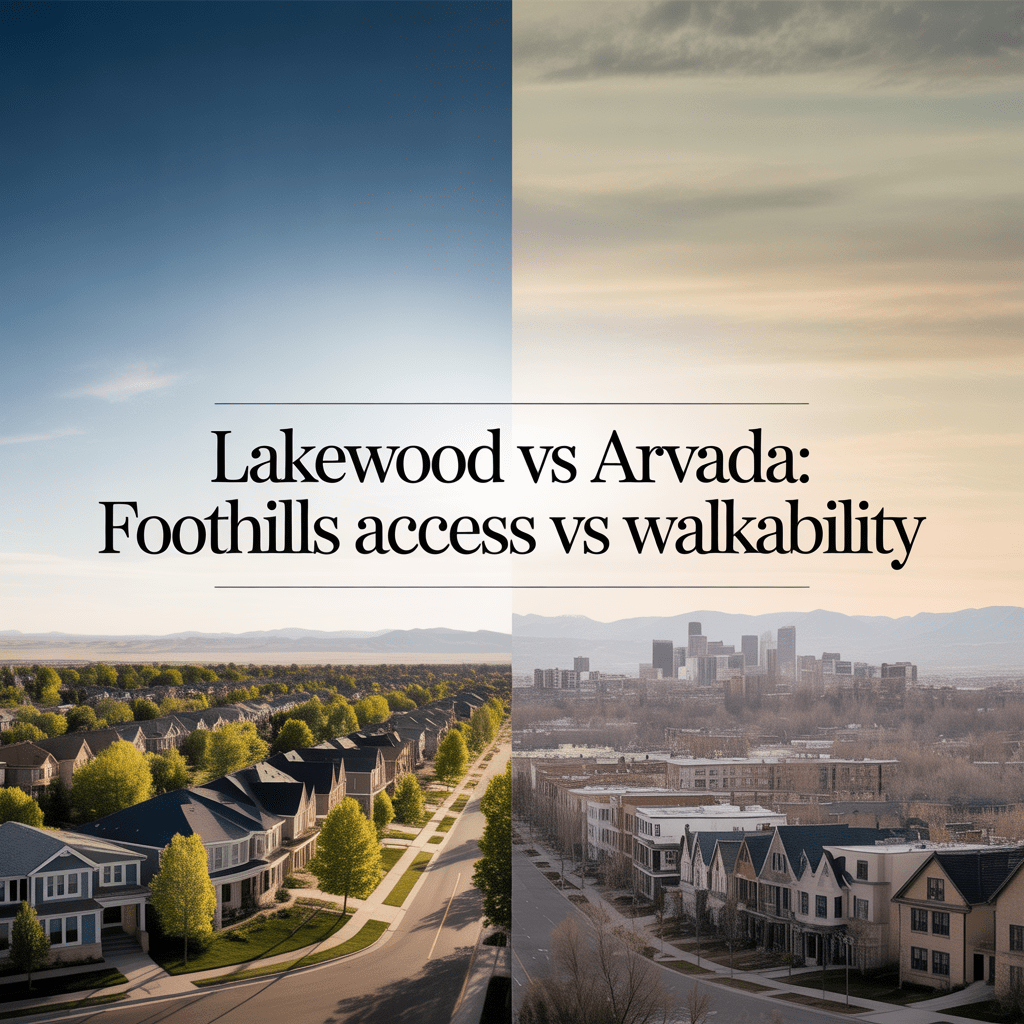
Buyers and sellers in the Denver metro area often weigh Lakewood and Arvada when seeking established suburbs with strong value retention. These neighboring cities offer distinct appeals—Lakewood’s proximity to the foothills versus Arvada’s pedestrian-friendly cores—that shape long-term ownership decisions. Understanding these differences helps thoughtful homeowners align location with daily routines and future needs.
Lakewood’s Foothills Proximity Drives Outdoor-Oriented Living
Lakewood sits directly against the Front Range, providing unmatched access to trails, parks, and mountain gateways from neighborhoods like Foothills and Green Mountain. This positioning matters because it reduces drive times to recreation spots such as William Frederick Hayden Green Mountain Park or Red Rocks Amphitheatre, appealing to buyers who prioritize weekend escapes over urban errands.
Residents gain practical benefits from this edge. Quick entry to C-470 or I-70 means less exposure to Denver’s variable weather during peak ski season traffic, when foothill roads see heavy use but clear faster than urban interstates. For families or remote workers, properties backing open space deliver privacy and views that hold premium in resale appraisals.
Housing stock here leans toward mid-century ranches and updated townhomes, with recent appreciation around 9% in the Lakewood/Golden corridor as buyers priced out of central Denver seek value plays. This trend persists because foothill adjacency supports steady demand from active adults who value proximity to biking paths and reservoirs over neighborhood density.
Commute Realities from Lakewood’s Foothills Areas
Car commutes to downtown Denver average 15-20 minutes from Lakewood’s western edges, shorter than many suburbs due to direct highway links. The W Line light rail adds 10 stations for public transit options, though times stretch to 30-50 minutes depending on the stop, making it viable for hybrid schedules but less ideal for rigid downtown routines.
Winter weather amplifies these patterns—snow slows I-70 feeders, yet foothill residents often bypass metro backups by heading west early. Sellers benefit as this access justifies 1-2% higher price per square foot in listings near trails, where median prices hover around $575,000 despite a slight 5.7% dip year-over-year.
Arvada’s Walkable Districts Foster Community Convenience
Arvada excels in neighborhoods designed for foot traffic, particularly Olde Town, where shops, breweries, and galleries cluster along main streets. Walkability here reduces reliance on cars for daily needs, lowering ownership costs like fuel and maintenance in a state where average monthly expenses exceed $4,100 including utilities and taxes.
This setup influences buyer behavior profoundly. Families appreciate sidewalks and RTD G Line stops that deliver 20-minute rides to Union Station, blending suburban calm with metro connectivity without the isolation of spread-out tracts. Neighborhoods like Historic Olde Town score high on pedestrian metrics, with 83% walkability to restaurants and strong community events that build local networks.
Property types favor Craftsman bungalows and newer townhomes, with medians near $605,000 and days on market around 35-45 as demand cools to balanced conditions. Price reductions are more common now, giving selective buyers negotiation room in a market shifting from rapid sales.
Navigating Arvada’s Transit and Daily Mobility
The G Line’s five stops streamline commutes, often under 25 minutes to downtown by rail, easing rush-hour I-76 congestion. This reliability draws relocating professionals who factor time savings into long-term budgets, especially with property taxes at about 0.8% and HOA fees ranging $150-250 monthly in amenity-light communities.
Walk scores matter for resale—properties within a half-mile of Olde Town hubs sell faster, as buyers weigh reduced commute stress against foothill drives. Arvada’s flatter terrain suits year-round strolling, contrasting Lakewood’s inclines that limit casual walks in snowy months.
Ownership Costs: Property Taxes, HOAs, and Hidden Expenses
Both areas carry similar baselines, with Colorado’s average buyer closing costs around $9,000-$40,000 on $530,000 medians, plus monthly outlays near $4,120 for mortgage, insurance, and taxes. Lakewood’s 0.8% tax rate applies to $575,000 medians, yielding about $460 monthly, while HOAs in Green Mountain-style developments hit $100-300 for pool or trail maintenance.
Arvada mirrors this, with slightly higher medians at $605,000 pushing taxes to $480 monthly; Olde Town HOAs often stay under $225 unless in luxury enclaves. The difference emerges in usage—foothills buyers budget more for plowing and tire wear from mountain passes, while walkable zones cut vehicle miles by 20-30% annually.
Buyers should model these against income: Arvada’s renter demand (medians $2,477) offers lease-back flexibility for sellers, whereas Lakewood’s outdoor premium stabilizes equity during dips like the recent 5.7% price softening.
Market Trends Shaping Buyer and Seller Strategies
Lakewood’s inventory benefits from new “middle housing” like duplexes near foothills, easing supply constraints and appealing to first-time buyers amid statewide growth outpacing permits. Appreciation in the 9.1% range reflects this, as relocating households from metros like Miami seek foothill value.
Arvada cools with 400-450 active listings and 97.5% sale-to-list ratios, favoring patient sellers who price realistically—43% see reductions but 19% close above ask in strong pockets. Both markets favor equity-rich owners, with gradual 2026 supply rises projected at 15-20%.
Buyer psychology tilts Lakewood for nature enthusiasts, Arvada for social connectors; sellers track days on market (31 Lakewood vs. 34-45 Arvada) to time listings around seasonal foothill or rail demand.
Schools, Resale Value, and Long-Term Holding
Strong schools bolster both—Lakewood’s edge in outdoor programs pairs with Arvada’s walk-to-elementaries like West Woods (9/10 rating). Resale holds firm, with Lakewood’s $278/sq ft up 1.1% and Arvada’s $288 steady, driven by Denver in-migration.
Foothills views add 5-10% premiums, enduring market cycles, while Arvada’s G Line future-proofs against remote work shifts. Ownership costs stabilize with low vacancy risks, as population growth sustains demand.
Choosing Based on Lifestyle Priorities
Lakewood suits those integrating mountains into routines, where access trumps daily walks and justifies added maintenance. Arvada fits convenience seekers, minimizing drives and fostering ties that enhance quality of life. Neither dominates; alignment with commute, recreation, and budget dictates value.
Reach out to me today for personalized insights on Lakewood or Arvada properties, including current listings and market forecasts tailored to your situation.



Why Some Denver Homes Sit Even When They’re Priced Right
To get more information on Denver → [Denver] & Overall Market Info → [Market Insights] When a home lingers on the market in the Denver metro area, even after being clearly priced in line with recent comparable sales, it raises a question every serious seller and agent has asked: Why isn’t it moving? In a region where…


The Renovation Upgrades That Don’t Pay Off in Colorado Homes
To get more information on Denver → [Denver] & Overall Market Info → [Market Insights] Home renovation decisions often come from good intentions: improving function, modernizing a space, or preparing to sell for top dollar. But in Colorado, not all home improvements yield meaningful returns — especially in a market influenced by weather extremes, commuting patterns,…

Why Denver’s ‘Hot Market’ Advice Still Hurts Buyers Today
To get more information on Denver → [Denver] & Overall Market Info → [Market Insights] For much of the past decade, Denver was known for one of the fastest-rising housing markets in the nation. From 2013 through the height of the pandemic surge, bidding wars and double-digit appreciation became routine. That era fundamentally changed how many…
 Mile High Home Group - Welcome to Denver
Leave a comment