

To get more information on Arvada→ [Arvada] & To get more information on Lakewood→ [Lakewood]
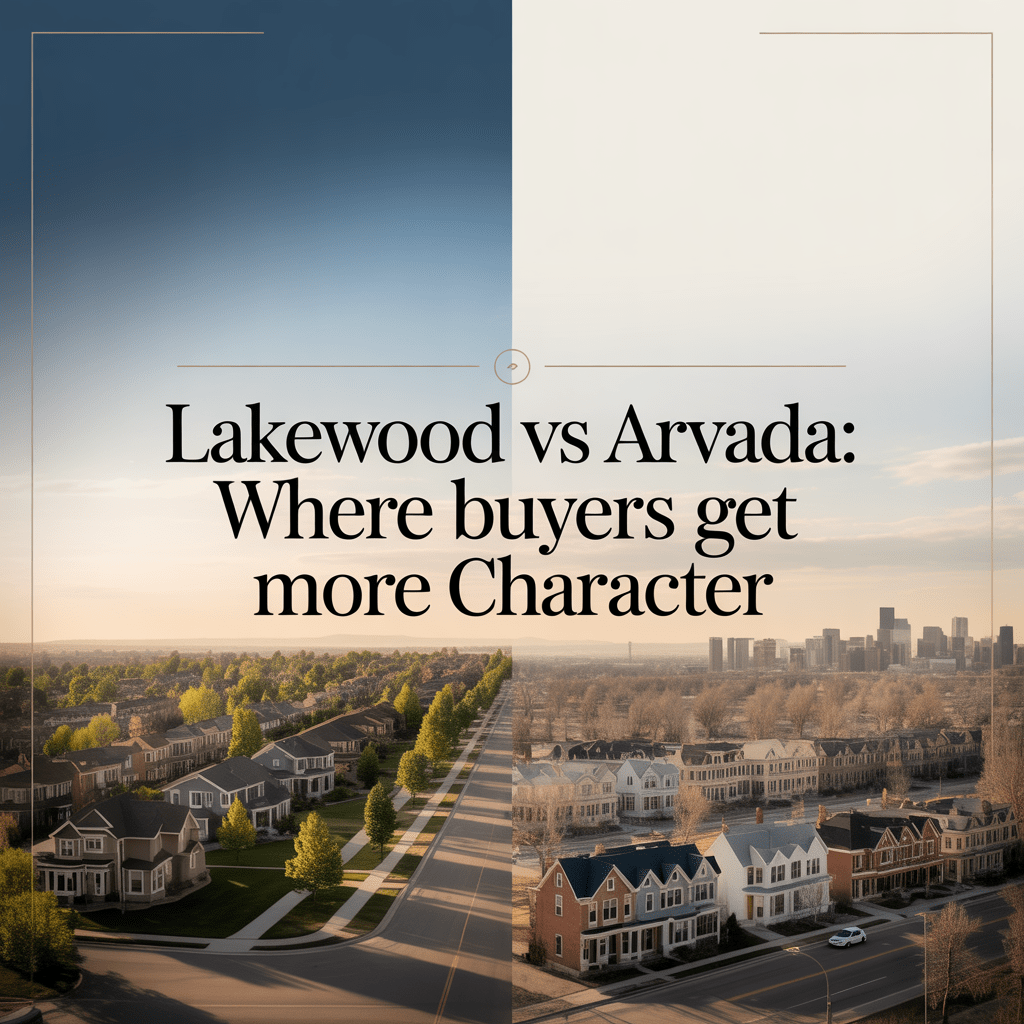
Buyers seeking distinctive homes in Denver metro suburbs often weigh Lakewood against Arvada, two Jefferson County cities with strong appeal for their proximity to Denver and varied housing options. Lakewood edges ahead for those prioritizing architectural character and established neighborhood feel, offering more mid-century and historic properties that reflect Colorado’s post-war growth. This post examines why Lakewood delivers greater character value, focusing on real estate implications like long-term appreciation and buyer retention.
Lakewood’s Historic Neighborhoods Deliver Unique Character
Lakewood’s housing stock stands out for its blend of early 20th-century and mid-century homes, concentrated in neighborhoods like Eiber and Belmar. These areas feature ranch-style houses, bungalows, and Tudor revivals built during the 1940s-1960s boom, when developers responded to Denver’s expansion by creating walkable enclaves near Colfax Avenue. This matters because such properties hold enduring appeal for buyers who value originality over uniformity—homes here often include original hardwood floors, coved ceilings, and mature landscaping that newer builds can’t replicate, fostering a sense of permanence amid Colorado’s rapid suburbanization.
The Eiber neighborhood exemplifies this: bounded by Colfax, Wadsworth, 6th Avenue, and Oak Street, it originated from local poultry ranches and orchards, evolving into a tight-knit community with preserved architectural details. Belmar, redeveloped from the former Villa Italia Mall site, now mixes historic elements with modern retail, enhancing walkability without erasing the area’s roots. Buyers drawn to character find these pockets resist the homogenization seen elsewhere, supporting steady demand from professionals relocating for Denver commutes.
Arvada’s Historic Districts Offer Charm but Less Depth
Arvada preserves character through districts like Olde Town Arvada, Reno Park, Stocke-Walter, and Churches Ranch, featuring early 20th-century brick buildings and 1920s commercial structures along Grandview Avenue. Reno Park, established in 1911, includes a gazebo and memorials tied to pioneer families, providing focal points for community events. These assets appeal to buyers seeking small-town nostalgia, particularly in the downtown historic district.
However, Arvada’s character is more district-specific and diluted by extensive new construction in master-planned communities like Candelas and Leyden Rock. These developments prioritize amenities over architectural variety, resulting in a housing stock heavier on contemporary townhomes and two-stories. This mix serves growing families but limits the pervasive historic feel Lakewood provides, influencing buyer psychology toward areas with proven longevity rather than emerging luxury.
Current Market Trends: Prices and Inventory Compared
As of late 2025, Lakewood’s median sale price sits at $575,000, down 5.7% year-over-year, with homes selling in 31 days amid 2 offers on average. Arvada’s median is $600,000, up 1.3%, but with longer 53-day market times and fewer offers. Price per square foot aligns closely at $278 in both, signaling similar value density.
Lakewood’s slight price dip reflects abundant older inventory—ranches and splits from the 1950s—that attracts value-conscious buyers priced out of central Denver. Arvada’s uptick ties to new supply in west zip codes like 80007, where medians reach $810,000, but this creates bifurcated markets: affordable eastside versus premium west. For character seekers, Lakewood’s stability means less risk of overpaying for novelty, as its established homes appreciate through renovations that enhance uniqueness.
| Aspect | Lakewood | Arvada |
|---|---|---|
| Median Sale Price (Nov 2025) | $575K (-5.7% YoY) | $600K (+1.3% YoY) |
| Days on Market | 31 | 53 |
| Avg Offers | 2 | 1 |
| Price/Sq Ft | $278 (+1.1% YoY) | $278 (+2.4% YoY) |
| Sales Volume (Nov) | 131 | 125 |
This table highlights Lakewood’s faster pace, underscoring how character-driven demand sustains velocity despite softer prices.
Commute Patterns Favor Both, with Nuances for Daily Life
Lakewood offers direct access to Denver via I-25 and C-470, with average drives of 11-20 minutes to downtown, bolstered by bus lines like Route 1 taking 32 minutes. Its southern position suits buyers working in southwest Denver or Golden, avoiding I-70 backups common in northern suburbs. Winter weather amplifies this: snow on C-470 clears faster than arterials through Arvada, reducing commute variability for remote-hybrid workers.
Arvada’s G Line light rail provides 20-25 minute rides from five stations to Union Station, ideal for eastside commuters, with car times of 18-20 minutes. Yet, its sprawl means west Arvada residents face 30+ minutes during peak hours on Ward Road or McIntyre, compounded by foothill grades that slick up in snow. Buyers prioritizing character often accept minor extensions for Lakewood’s central density, where neighborhoods cluster near transit without long hauls.
Schools and Family Considerations in Each Suburb
Jefferson County R-1 serves both, with strong options influencing family buyers who weigh education against home character. Lakewood hosts D’Evelyn Junior/Senior High (A+ Niche grade) and schools like Kyffin Elementary (A-), emphasizing rigorous academics that retain high-achieving families. These draw professionals valuing neighborhood stability over flashier facilities.
Arvada shines with Ralston Valley Senior High, West Woods Elementary, and Meiklejohn (top-ranked, 8/10 average), boasting 40% math and 54% reading proficiency above state averages. Newer communities bolster these with modern campuses, appealing to relocating families. Still, Lakewood’s established schools integrate seamlessly with character homes, supporting multigenerational ownership where families stay for both education and architectural legacy.
Ownership Costs: Taxes, Maintenance, and Long-Term Value
Jefferson County’s property tax rate hovers around 0.5-0.6% of assessed value for both, but Lakewood’s older homes often qualify for historic exemptions or lower assessments, trimming bills on $500K properties to $3,000-4,000 annually. Maintenance on character homes requires budgeting for updates—$10,000-20,000 for roofs or windows—but yields 9.1% appreciation in Lakewood/Golden as buyers pay premiums for authenticity.
Arvada mirrors taxes, but new builds carry higher HOA fees ($200-500/month) in planned areas, offsetting initial savings. Winter heating costs rise similarly due to Colorado’s cold snaps, yet Lakewood’s mature trees provide natural insulation, cutting utilities 10-15% over exposed new tracts. Long-term, character preserves value: Lakewood resales hold 3-5% better in softening markets, as buyers seek irreplaceable features amid inventory growth.
Why Lakewood Wins for Buyers Seeking Character
Lakewood’s edge lies in its pervasive architectural diversity, from Eiber’s bungalows to Belmar’s evolved historic core, creating neighborhoods that age gracefully and command loyalty. Arvada’s districts charm selectively, but vast new developments dilute the character quotient, appealing more to those prioritizing modernity. Market data reinforces this: Lakewood’s quicker sales and value stability suit discerning buyers who understand character drives retention and appreciation in Colorado’s dynamic suburbs.
Denver metro growth pressures housing stock, yet Lakewood’s older inventory offers refuge—practical for ownership costs, commutes, and schools without sacrificing distinctiveness. Serious buyers evaluate these factors to secure long-term equity.
Reach out to me today for personalized insights on Lakewood and Arvada properties matching your priorities for character and value.



Why Master-Planned Communities Feel Different After Year Three
To get more information on Denver → [Denver] & Overall Market Info → [Market Insights] Master-planned communities across Colorado—especially throughout the Denver metro, the northern corridor from Broomfield to Fort Collins, and the southern suburbs like Castle Rock and Parker—have transformed how people experience neighborhood living. Their early years often deliver a polished vision: new infrastructure,…


The Hidden Cost of Hail, Insurance, and Roof Age in Colorado
To get more information on Denver → [Denver] & Overall Market Info → [Market Insights] Colorado homeowners understand that owning property here comes with unique considerations—from snow load in the mountains to rapid freeze-thaw cycles on the Front Range. Yet one of the least understood and often most expensive aspects of homeownership in this state is…

Why Some Denver Homes Sit Even When They’re Priced Right
To get more information on Denver → [Denver] & Overall Market Info → [Market Insights] When a home lingers on the market in the Denver metro area, even after being clearly priced in line with recent comparable sales, it raises a question every serious seller and agent has asked: Why isn’t it moving? In a region where…
 Mile High Home Group - Welcome to Denver
Leave a comment