

To get more information on Denver → [Littleton] & Overall Market Info → [Market Insights]
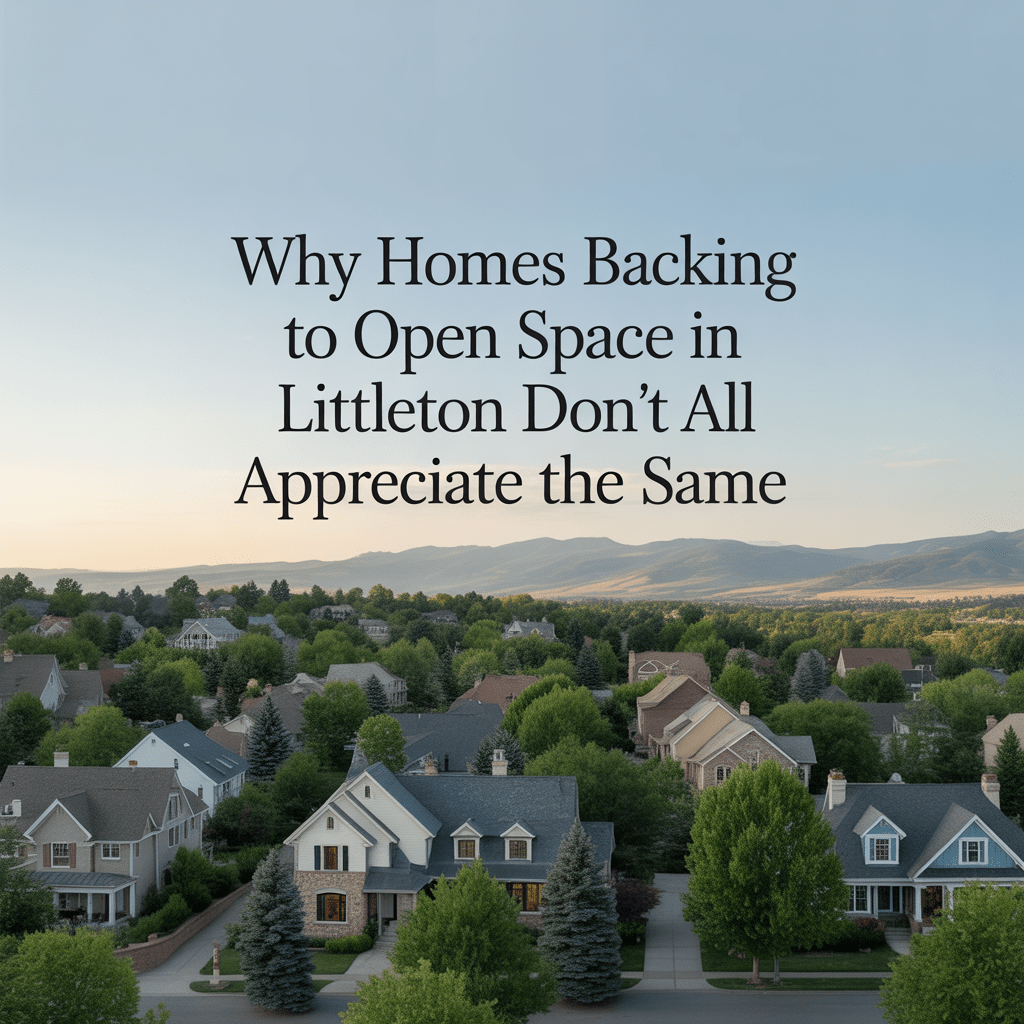
Homes backing to open space in Littleton attract buyers seeking privacy and views, yet their appreciation rates vary widely. This variation stems from specific site characteristics and market dynamics rather than the open space adjacency alone. Understanding these differences helps buyers and sellers make informed decisions in the Denver metro’s competitive landscape.
Open Space Appeal in Littleton Real Estate
Open space provides tangible benefits in Littleton neighborhoods, where properties adjacent to preserved land often command premiums. Studies show proximity to protected open areas can increase residential values by reflecting buyer demand for natural amenities and development buffers.
In Littleton, areas like Roxborough Village and those near Chatfield State Park exemplify this, with homes gaining from scenic backdrops and trail access that enhance daily living without urban encroachment. These premiums arise because buyers weigh long-term stability against potential maintenance costs tied to Colorado’s variable weather patterns, which affect landscaping and exterior durability.
However, the premium depends on the open space’s quality and permanence. Permanently protected land yields higher value uplift—up to three times that of developable parcels—since it assures no future building nearby. Sellers benefit by emphasizing this in listings, while buyers assess how it offsets higher ownership costs like elevated property taxes in Arapahoe and Douglas Counties.
Key Factors Driving Uneven Appreciation
Appreciation diverges due to multiple property-specific elements interacting with the open space feature. Lot orientation, maintenance history, and commute access create measurable value gaps among otherwise similar homes.
Orientation and Views Matter
Homes with south- or west-facing backyards to open space capture mountain vistas, boosting desirability in a market where Front Range views signal premium positioning. Elevated lots in neighborhoods like Broadway Estates or Progress Park amplify this, as unobstructed sightlines preserve perceived exclusivity.
Conversely, north-facing exposures limit sunlight, extending heating seasons amid Colorado’s cold snaps and potentially raising utility bills by 10-15% annually. Buyers factor this into offers, leading to slower appreciation for shaded properties. Data from hedonic models confirms closer proximity and superior views correlate with 0.6-1.9% higher absolute value increases.
Trail Proximity Creates Divides
Littleton’s extensive trail network, including the High Line Canal and local linkages, draws active buyers but penalizes trailside homes. Properties directly backing high-traffic paths face privacy erosion from pedestrians and cyclists, a concern validated in studies where trail adjacency occasionally depresses values by up to 6.8% due to noise and perceived security risks.
In contrast, homes buffered by 100-200 feet of undeveloped open space avoid these issues, enjoying the amenity without drawbacks. This buffer preserves backyard seclusion, critical for families in suburbs where home offices demand quiet amid remote work trends. Sellers of trailside homes often invest in fencing or screening, yet appreciation lags unless offset by superior interiors.
Open Space Quality Influences Long-Term Value
Not all open space delivers equal benefits; its type, upkeep, and usage patterns dictate appreciation trajectories. Protected natural areas outperform maintained parks or passive fields in value retention.
Vegetated open space with mature trees or prairie enhances aesthetics and wildlife viewing, aligning with buyer preferences for low-maintenance backdrops. In Littleton, neighborhoods abutting South Platte River corridors or Roxborough’s red rock formations see stronger demand from relocating professionals valuing biodiversity.
Mowed recreational fields, however, attract organized sports, introducing seasonal crowds and lighting that disrupt evenings. This dynamic reduces the premium for adjacent homes, as buyers prioritize predictability over intermittent access. Jefferson County Open Space data underscores how forest or wetland adjacency yields higher premiums than barren or grazed land.
Home Condition and Updates Bridge Gaps
Even with prime open space backing, outdated homes appreciate slower in Littleton’s buyer-driven market. Thoughtful updates tailored to local needs—energy-efficient windows for high-altitude sun, or expanded patios for mild summers—can elevate values by 10-20%.
Mid-century homes in Foothill Green or Broadway Estates, common open space backers, hold equity potential through modernization, but deferred maintenance like roof wear from heavy snow loads erodes gains. Buyers scrutinize these, as Colorado’s freeze-thaw cycles accelerate deterioration, inflating ownership costs.
Kitchen and bath refreshes resonate most, signaling move-in readiness amid low inventory. Properties with recent HVAC upgrades handle altitude-related strain better, appealing to long-term holders. Sellers ignoring this face longer market times, compressing appreciation relative to updated peers.
Neighborhood Context Shapes Buyer Behavior
Littleton’s diverse fabric means open space-backed homes in established enclaves outperform those in newer developments. Commute patterns to DTC or downtown Denver favor properties near C-470, where 15-20 minute drives preserve value amid traffic growth.
Neighborhood maturity brings mature trees and community cohesion, buffering against market dips. In Progress Park, historic charm plus open space yields outsized returns for renovators. Newer builds like Solstice offer warranties but smaller lots, diluting the open space premium as HOA fees rise.
School districts and light rail proximity further stratify values; Littleton Public Schools draw families, yet trail noise near stations tempers enthusiasm. Relocators from high-cost areas like California prioritize these, driving uneven bidding.
Ownership Costs in Context
Colorado’s realities amplify disparities. Elevated property taxes on appreciated open space premiums—often 1-1.5% of assessed value—erode net gains for high-maintenance yards exposed to wind and drought.
Insurance varies by exposure; homes with wildfire-prone open space face premiums 20-30% above average, deterring risk-averse buyers. Water restrictions impact xeriscaping needs, favoring low-upkeep backings.
These costs explain why pristine, low-intervention open space homes retain equity better, as buyers model total ownership over 10-20 years.
Market Trends Reinforce Variations
Littleton’s median values hover around $595,000-$617,000, with open space properties tracking 2-8% annual shifts but diverging by the factors above. Recent moderation favors selective appreciation for premium sites.
Inventory constraints persist, rewarding sellers of differentiated homes. Buyers, increasingly local or from tech sectors, demand data-driven proofs of value stability.
Conclusion
Homes backing open space in Littleton appreciate differently due to orientation, trail buffers, space quality, condition, and context—each interacting with local realities like weather and commutes. Buyers secure long-term value by prioritizing buffered, view-oriented sites with updates; sellers maximize returns through targeted enhancements.
Reach out to me for a personalized analysis of specific properties or neighborhoods to uncover hidden appreciation potential.



The Littleton Pocket Where Buyers Stretch Their Budget Without Realizing Why
To get more information on Denver → [Littleton] & Overall Market Info → [Market Insights] Few places in the Denver metro area test a buyer’s sense of value quite like western Littleton. Tucked between the foothills and the urban core, this part of town sits at a quiet intersection of lifestyle, convenience, and inventory — and…

Why Two Homes Five Blocks Apart in Littleton Attract Completely Different Buyers
To get more information on Denver → [Littleton] & Overall Market Info → [Market Insights] In Littleton, Colorado, properties separated by just five blocks often draw buyers with sharply divergent priorities and budgets. These micro-market differences stem from subtle shifts in school boundaries, commute access, and neighborhood character, reshaping who competes for each home and at…
Littleton Micro-Neighborhoods That Attract Long-Term Owners, Not Flippers
To get more information on Denver → [Littleton] & Overall Market Info → [Market Insights] In Littleton, Colorado, certain micro-neighborhoods stand out for drawing buyers committed to decades of ownership rather than quick resale. These pockets within the Denver metro suburbs prioritize stability, community cohesion, and practical livability over speculative gains. Understanding their appeal reveals why…
 Mile High Home Group - Welcome to Denver
Leave a comment