

To get more information on Denver → [Littleton] & Overall Market Info → [Market Insights]
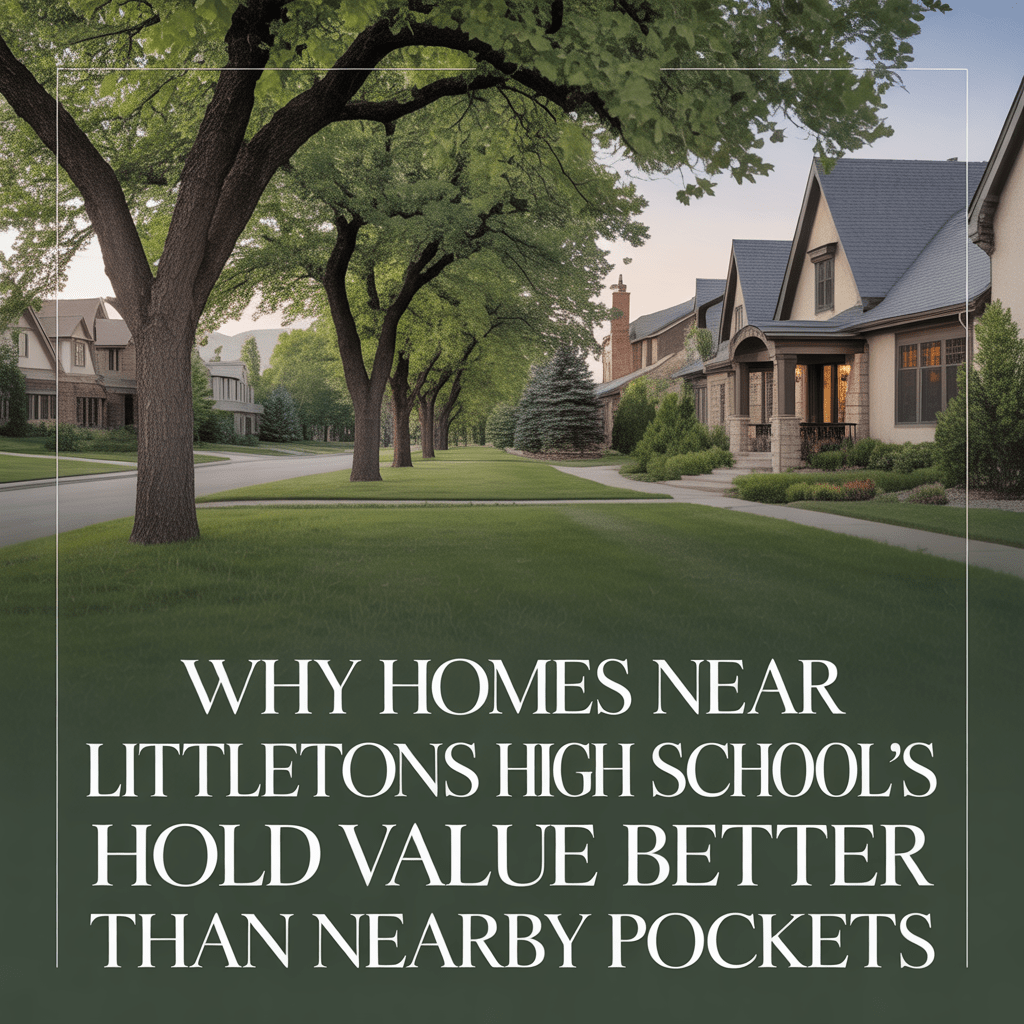
Colorado’s real estate market rewards properties tied to enduring community strengths. In the Denver metro area, neighborhoods around Littleton’s high schools consistently outperform adjacent areas in long-term appreciation and resale stability. This pattern stems from family-driven demand and measurable economic factors, not fleeting trends.
Understanding Littleton’s Educational Landscape
Littleton Public Schools serve a diverse set of high schools, each anchoring specific neighborhoods with distinct housing characteristics. Heritage High School in the eastern part of Littleton draws families to established subdivisions like Sunnyside and Broadmoor Heights, where mid-century ranch homes dominate the stock. Chatfield Senior High, positioned further southwest near Highlands Ranch borders, supports larger modern properties in areas like Westlake and Terra Park, appealing to growing households.
Heritage High, opened in 1972, oversees a student body known for consistent academic performance above state averages in math and reading proficiency. Chatfield High, established in 1985, emphasizes STEM programs and extracurriculars that attract high-achieving families from surrounding Jefferson and Douglas Counties. Littleton High School itself, the district’s flagship since 1921, sits centrally and influences pockets around Santa Fe Drive, where smaller, renovated bungalows mix with newer townhomes.
These schools shape buyer behavior in ways that extend beyond test scores. Families prioritize proximity to reduce commute times to school events and daily drop-offs, especially given Colorado’s winter weather patterns that make morning drives unpredictable. Ownership costs in these zones—property taxes averaging 0.6% of assessed value plus higher utility bills from snow-related maintenance—remain justified by the stability these areas provide.
How School Proximity Drives Property Values
Properties within walking distance or a five-minute drive of these high schools command premiums of 5-10% over comparable homes just beyond the attendance zones. This gap persists because buyers view school quality as a proxy for neighborhood stability and future resale ease. In Colorado, where inventory shortages have lingered since the early 2020s, sellers near Heritage or Chatfield face less pricing pressure during slowdowns.
Consider commute patterns: Denver metro traffic on C-470 or Santa Fe Boulevard peaks during school hours, amplifying the value of short trips. A home two miles from Chatfield High might add 15-20 minutes daily per child, factoring in bus delays or parental shuttles. Over a high school career, this compounds into significant time savings, influencing parents’ willingness to pay more upfront.
Market data reinforces this. Jefferson County properties near top-rated schools have seen steadier appreciation through cycles, including the 2023-2025 rate hikes. Buyers, often relocating from California or Texas, scrutinize school boundaries first, using tools like the district’s GIS maps to confirm zones before touring. This selective demand insulates these pockets from broader metro corrections, where non-school-centric areas like eastern Englewood see sharper value dips.
Comparing Neighborhood Performance
Homes near Littleton High schools outperform nearby alternatives in key metrics. The table below contrasts typical single-family homes (2,200-3,000 sq ft, built 1970-2005) in school-adjacent areas versus pockets 2-3 miles away.
Schools like Chatfield bolster this edge through programs such as advanced placement courses and athletics, which retain families long-term. Heritage’s performing arts focus appeals to creative households, reducing turnover. In contrast, adjacent areas without direct school ties experience higher investor activity, leading to volatile pricing when rental demand shifts.
Douglas County’s proximity to Chatfield adds another layer. While Highlands Ranch offers similar amenities, homes strictly in Littleton boundaries benefit from lower mill levy rates—about $50 less per $100,000 assessed value—lowering carrying costs without sacrificing quality.
Ownership Costs and Long-Term Value
Colorado’s high ownership expenses—property taxes, insurance, and heating—hit harder outside stable pockets. Near Littleton High schools, mature tree canopies and community associations maintain curb appeal, supporting values amid rising energy costs from prolonged winters. A 2,500 sq ft home near Heritage might incur $4,500 annually in taxes, offset by 20% lower vacancy risks during resales.
Buyer psychology plays a role. Serious purchasers, often dual-income professionals commuting to Denver or Centennial, calculate lifetime costs including potential college scholarships tied to school performance. This forward-thinking approach favors school zones, where equity builds steadily. During the 2025 market balance—marked by 4.3 months of supply statewide—these areas saw concessions below 2% of list price, versus 5-7% elsewhere.
Suburban stock in these zones favors single-family detached homes, which appreciate faster than the townhomes prevalent in outer Littleton fringes. Weather impacts amplify this: Snow accumulation on older roofs demands proximity to plowed school routes, a practical edge for families over empty-nesters in distant developments.
Market Trends Favoring School-Centric Areas
Colorado’s 2026 outlook points to moderated growth around 4% statewide, with Denver metro submarkets like Littleton leading due to inventory constraints. School proximity acts as a buffer against this moderation. As rates stabilize in the mid-6% range, families re-enter, prioritizing zones where public education reduces private schooling expenses—often $15,000+ per child annually.
Relocating buyers from high-cost states target Littleton for its blend of accessibility and rankings. Chatfield’s feeder patterns ensure continuity from elementary levels, fostering loyalty. This contrasts with nearby areas like southwest Aurora, where rezoning risks introduce uncertainty.
Seller strategy matters here. Pricing near Heritage at market comps yields quickest closes, preserving equity. Overbuilding in non-school pockets, such as Ken Caryl’s newer tracts, dilutes value as supply normalizes.
Navigating Purchases or Sales in These Pockets
Buyers should verify boundaries using Littleton Public Schools’ interactive maps and attend open houses during school events to gauge community vibe. Sellers benefit from staging that highlights school proximity—brochures noting “Chatfield High walkable” convert fence-sitters.
Winter listings near Littleton High perform well, as motivated families brave weather for prime options. Agents familiar with Jefferson County nuances, like easements affecting older Heritage homes, streamline transactions.
Conclusion
Homes near Littleton’s high schools—Heritage, Chatfield, and Littleton High—hold value through predictable demand from families valuing time, stability, and education. Adjacent pockets lack this anchor, facing higher market sensitivity. These dynamics, rooted in local realities like commutes and costs, position school zones for sustained performance amid Colorado’s evolving market.
Reach out to me today for personalized insights on Littleton properties or market timing.



The Littleton Pocket Where Buyers Stretch Their Budget Without Realizing Why
To get more information on Denver → [Littleton] & Overall Market Info → [Market Insights] Few places in the Denver metro area test a buyer’s sense of value quite like western Littleton. Tucked between the foothills and the urban core, this part of town sits at a quiet intersection of lifestyle, convenience, and inventory — and…

Why Two Homes Five Blocks Apart in Littleton Attract Completely Different Buyers
To get more information on Denver → [Littleton] & Overall Market Info → [Market Insights] In Littleton, Colorado, properties separated by just five blocks often draw buyers with sharply divergent priorities and budgets. These micro-market differences stem from subtle shifts in school boundaries, commute access, and neighborhood character, reshaping who competes for each home and at…

Littleton Micro-Neighborhoods That Attract Long-Term Owners, Not Flippers
To get more information on Denver → [Littleton] & Overall Market Info → [Market Insights] In Littleton, Colorado, certain micro-neighborhoods stand out for drawing buyers committed to decades of ownership rather than quick resale. These pockets within the Denver metro suburbs prioritize stability, community cohesion, and practical livability over speculative gains. Understanding their appeal reveals why…
 Mile High Home Group - Welcome to Denver
Leave a comment