

To get more information on Denver → [Littleton] & Overall Market Info → [Market Insights]
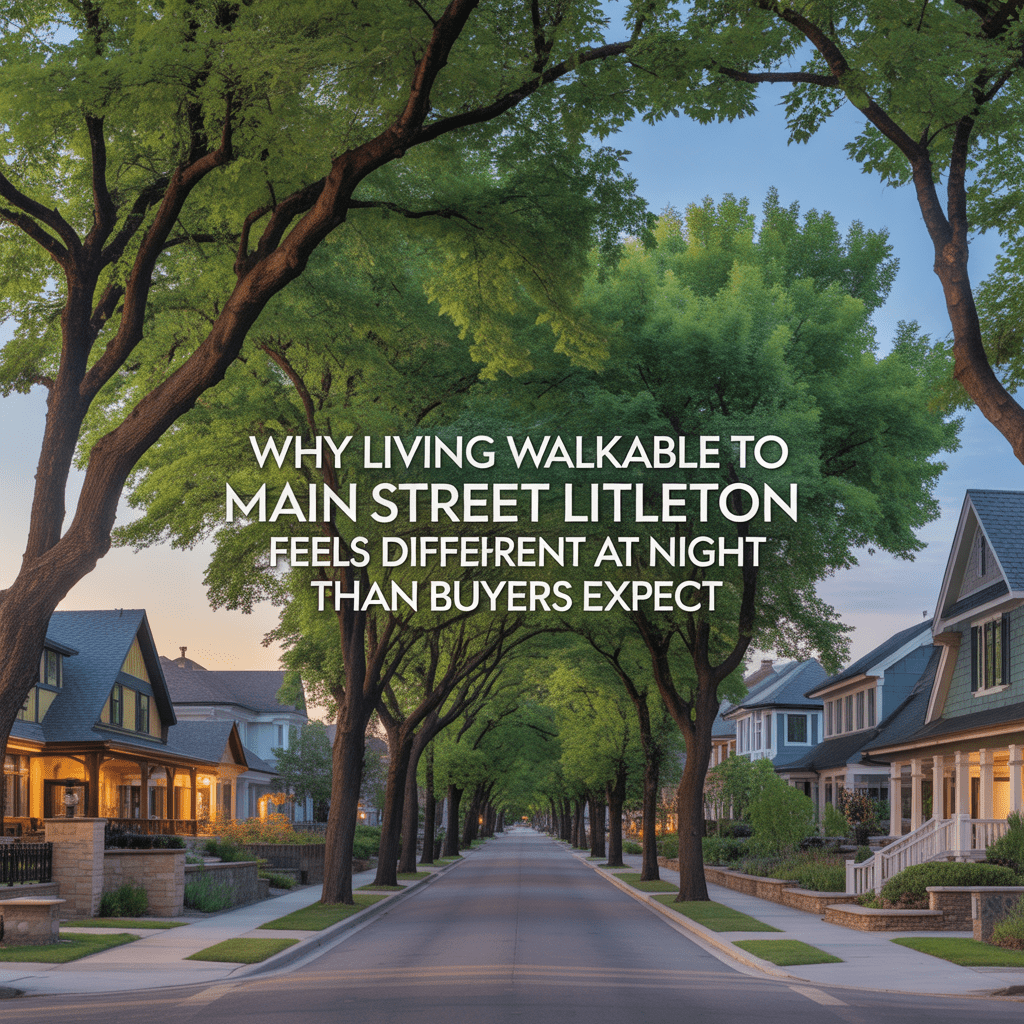
Downtown Littleton has long drawn attention from homebuyers seeking that elusive blend of small-town charm and urban accessibility. The appeal seems straightforward: a scenic main street lined with restaurants, boutiques, and galleries, set against the backdrop of mature trees, historic homes, and light-rail access to downtown Denver. On paper, homes within walking distance of Main Street appear to check every box — character, community, and convenience.
But once the sun goes down, living walkable to Main Street feels more nuanced than many anticipate. The rhythms of the street change, behaviors shift, and the very qualities that create daytime popularity can alter how residents experience their surroundings at night. Understanding these dynamics is key to evaluating whether this lifestyle aligns with what you — or your buyers — truly value long-term.
The Changing Character of Main Street After Dark
Main Street Littleton is vibrant during the day. Foot traffic flows steadily from coffee shops to lunch spots, boutiques, and art studios. Evenings tell a different story. While it never resembles the density of Denver’s larger entertainment districts, night brings a subtle transformation: music seeping from patios, laughter spilling out of restaurants, and people gathering outside late-night spots.
For homeowners nearby, this changing tempo is both part of the charm and part of the calculation. Walkability doesn’t mean quiet; it means proximity — to both convenience and activity. Street sounds, lights, and late-night visitors are normal facets of living close to any local downtown. Buyers often imagine the ease of strolling to dinner but underestimate how often that same convenience invites a livelier backdrop near their windows.
In Littleton, this is especially true around blocks south and west of Main Street where mixed-use zoning allows restaurants, taprooms, and small venues that stay active past 10 p.m. Those looking for true peace at night often prefer to live two to five blocks from the corridor rather than on it. That half-mile difference can dramatically shift the after-dark experience while maintaining easy access to downtown amenities.
The Practical Layers of Walkable Living
Living within walking distance of Main Street adds meaningful value for many residents, but it introduces trade-offs that affect daily routines and long-term satisfaction. Here are a few often overlooked factors that matter in practice:
1. Traffic and Parking Spillover
Evening visitors fill available street parking quickly, particularly on weekends and during community events like Western Welcome Week or farmers’ markets. Homeowners without private drives or garages find themselves navigating neighborhood parking restrictions and transient foot traffic. For some, this is a minor inconvenience; for others, it reshapes daily patterns — from when they host guests to how often they choose to walk rather than drive.
2. Lighting and Ambiance
Nighttime walkability depends heavily on lighting, safety, and street maintenance. The City of Littleton has invested in pedestrian infrastructure, but illumination varies block to block, especially in older residential sections built before modern urban planning standards. Buyers who value evening walks should take time to experience the area after dark. A shaded street that feels picturesque at noon can seem isolated after dusk.
3. Noise Profiles and Sound Carry
Sound travels differently in Littleton’s older neighborhoods, where mature trees and narrow streets shape acoustics. A Saturday night crowd at a nearby brewery may seem distant during an afternoon open house, yet clearly audible at 11 p.m. Modern insulation helps, but many homes built before 1960 — especially Craftsman and bungalow styles common near Main Street — have original single-pane windows or vented foundations that allow more ambient noise indoors.
What Buyers Often Misread About “Charm”
Buyer psychology plays a major role in downtown Littleton’s market. The nostalgic appeal of walkable living — strolling tree-lined streets to dinner, waving to neighbors on front porches — is deeply emotional. But nostalgia does not always align with the rhythms of everyday life.
Homes near Main Street tend to be smaller, older, and more architecturally varied than new construction farther west in Sterling Ranch or south in Highlands Ranch. Yards are compact, garages may be detached, and modern conveniences like central air or high-capacity wiring sometimes require retrofitting. These features are part of the charm for those who appreciate preservation and urban integration — yet they also represent ongoing ownership costs and maintenance realities.
Another misconception is assuming “walkable” always equals “higher value.” Proximity to Main Street can boost desirability, but long-term appreciation depends more on buyer perception trends than geography alone. Homes located slightly beyond the core often retain comparable or better resale appeal because they blend accessibility with residential tranquility — a balance that post-pandemic buyers increasingly seek.
Safety, Perception, and Reality
Safety concerns are often raised by buyers unfamiliar with mixed-use districts. Littleton’s downtown remains statistically low in violent crime compared with central Denver or Colfax-adjacent neighborhoods, but perceptions nonetheless evolve at night. More people on the street means greater visibility — and occasionally more late-night noise or activity.
Experienced homeowners evaluate this by spending time in the area after 9 p.m., not relying solely on online community boards. They walk routes to the light rail, note lighting consistency, and observe how the environment feels rather than how it looks in daylight listings. That firsthand perspective shapes confidence and prevents post-purchase surprises.
Importantly, many local residents appreciate the mild bustle. It creates a sense of shared space and real neighborhood life. Unlike newer master-planned suburbs that quiet completely by evening, downtown Littleton retains a steady pulse — subdued, but present. Understanding whether that rhythm energizes or unsettles you is a deeply personal decision worth considering before making an offer.
The Night Economy and Long-Term Value
From a market perspective, the sustained vitality of Littleton’s Main Street after dark signals resilience. Evening foot traffic supports local businesses, which in turn sustains surrounding property values. Restaurants, small venues, and boutique retailers extend activity hours and strengthen the area’s economic ecosystem.
Historically, mixed-use districts that remain active beyond 5 p.m. show stronger durability through economic cycles. Retail spaces stay occupied, streets stay maintained, and city investment continues. For homeowners, this translates into stability — though not always quiet. Buyers prioritizing appreciation potential often accept minor inconveniences like occasional noise or parking competition in exchange for being part of a continuously engaged urban micro-economy.
What matters more is how comfortably you can live with that engagement long-term. Main Street’s character will not revert to suburban stillness; it’s intentionally designed for connection and movement. Those seeking solitude or strictly residential calm may find better balance in nearby enclaves such as Sunset Ridge, Broadmoor, or neighborhoods just east of South Santa Fe Drive, where walkability remains possible but nightlife diminishes quickly.
Understanding Commute and Connectivity
Downtown Littleton’s transit links add another layer of evening distinction. For many, the ability to walk home from the RTD light rail after attending a Denver event is a major advantage. Yet late-night commuters should note that schedules thin after 10 p.m., and trains arriving later can amplify pedestrian activity around stations.
For residents, that dynamic affects where they prefer to live relative to the tracks. Those within two or three blocks of the Littleton Downtown Station experience the convenience directly but also share their block with riders coming and going throughout the evening. Those five or more blocks away typically enjoy the same accessibility without as much night foot traffic.
Connectivity also shapes social habits. Proximity to transit and downtown corridors encourages spontaneous evenings out — a lifestyle difference that subtly defines household patterns over time. In practice, that means more walking, fewer long drives, and a deeper connection to the rhythm of the city — for better or for worse, depending on personal preference.
Ownership Costs and Long-Term Maintenance
Walkable neighborhoods like downtown Littleton reward long-term ownership through location stability but can challenge budgets with maintenance tied to older housing stock. Original hardwood floors, masonry façades, and century-old plumbing require ongoing care. Renovations are often subject to local historical or architectural guidelines, especially for homes within designated districts.
Buyers should evaluate not just purchase price but what it means to preserve character authentically. A small bungalow may need updated sewer lines, energy efficiency upgrades, or structural retrofits to achieve modern comfort — expenses that rarely appear in listing descriptions. However, these investments typically return value through enhanced livability and preserved neighborhood cohesion.
From a macroeconomic standpoint, homes near Main Street tend to maintain balanced appreciation even in slower markets, supported by consistent demand from lifestyle-driven buyers. That steady interest reduces volatility but also limits late-stage price acceleration. It’s a market well-suited for people who value place and routine over speculative gain.
Seeing Main Street at Night Before You Buy
There’s no substitute for intentional observation. Buyers weighing whether to live walkable to Main Street should visit on multiple evenings — weekdays and weekends — and simply walk. Listen for ambient sounds. Watch how lighting feels along your route. Notice where restaurants close early and where activity lingers.
Talk to residents out for an evening stroll; locals often share candid, practical insights that don’t appear in data sets. Observe how easily people find parking, what traffic patterns look like near closing times, and whether side streets maintain a sense of comfort after hours. Those impressions will tell you more about long-term livability than any listing feature ever can.
Conclusion: The Real Measure of Walkable Living
Living walkable to Main Street Littleton delivers a distinctive experience — layered, lively, and rooted in community authenticity. It is neither uniformly idyllic nor unmanageable. It simply reflects what genuine downtown living feels like in a maturing Colorado suburb that has preserved its local center while embracing growth.
For some, the nighttime rhythm enhances the sense of belonging, turning a cluster of shops and restaurants into an extension of daily life. For others, it reveals hidden costs — less quiet, more motion, and minor trade-offs that matter when you’re home late. Recognizing these contrasts early helps ensure your decision aligns not just with what you admire about Main Street, but how you actually live when the lights dim and the street settles into its nighttime pulse.
If you’re considering buying or selling near Main Street Littleton — or simply trying to decide whether walkable downtown living fits your lifestyle — reach out to me today for a detailed consultation. I can help you evaluate market trends, neighborhood nuances, and long-term value specific to your goals.



The Littleton Pocket Where Buyers Stretch Their Budget Without Realizing Why
To get more information on Denver → [Littleton] & Overall Market Info → [Market Insights] Few places in the Denver metro area test a buyer’s sense of value quite like western Littleton. Tucked between the foothills and the urban core, this part of town sits at a quiet intersection of lifestyle, convenience, and inventory — and…

Why Two Homes Five Blocks Apart in Littleton Attract Completely Different Buyers
To get more information on Denver → [Littleton] & Overall Market Info → [Market Insights] In Littleton, Colorado, properties separated by just five blocks often draw buyers with sharply divergent priorities and budgets. These micro-market differences stem from subtle shifts in school boundaries, commute access, and neighborhood character, reshaping who competes for each home and at…

Littleton Micro-Neighborhoods That Attract Long-Term Owners, Not Flippers
To get more information on Denver → [Littleton] & Overall Market Info → [Market Insights] In Littleton, Colorado, certain micro-neighborhoods stand out for drawing buyers committed to decades of ownership rather than quick resale. These pockets within the Denver metro suburbs prioritize stability, community cohesion, and practical livability over speculative gains. Understanding their appeal reveals why…
 Mile High Home Group - Welcome to Denver
Leave a comment